FUDA  ROOFING
ROOFING
+86 138 6922 6336
Watch Factory
ROOFING
If you have ever requested quotes from two suppliers and received prices that are 30–40% apart for what looks like the "same" tile, the reason is almost always hidden in the specification sheet — not the marketing photos. Steel thickness, the aluminium-zinc coating weight, and the stone granule layer are what actually determine how a roof performs, how long it lasts, and what it is genuinely worth.
Getting these details wrong affects product performance, your project cost, shipping weight, installation effort, and the warranty you can honestly claim in your local market. This guide explains the core stone coated metal roof tile specifications, what the numbers mean, and the exact checks to run before you place an order.
A stone coated metal roof tile is a pressed steel panel made from a galvalume (aluminium-zinc) coated steel sheet, formed into a tile profile, then coated with an acrylic resin binder and embedded with natural stone granules. The result combines the strength and light weight of steel with the traditional look of clay, shake, or slate.
The specification that matters is not the final appearance but the layered construction: the base steel gauge, the metallic anti-corrosion coating, the primer and acrylic layers, and the stone granule surface. Each layer has a measurable specification, and each one affects both cost and durability.
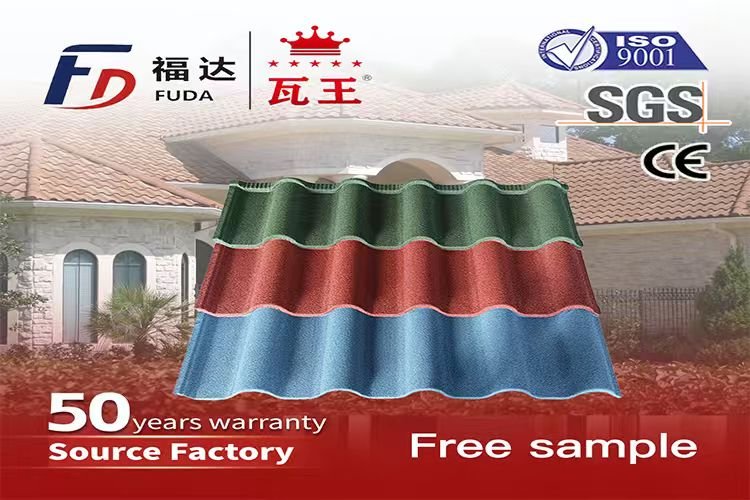
The table below summarises the typical specification values you will see on a data sheet. Values vary by profile and project, so treat these as reference points and confirm the final figures with your supplier.
| Specification | Typical Option | Buyer Notes |
|---|---|---|
| Base steel thickness | 0.35 / 0.40 / 0.45 mm | Thicker steel = more durable and higher cost |
| Metallic coating | AZ150 galvalume (Al-Zn) | Confirm the "AZ" number — higher is more corrosion-resistant |
| Tile size | 1340 × 420 mm (varies by profile) | Determines coverage per tile and pieces per m² |
| Weight | 6–7 kg/m² | ~1/6 of clay or concrete tiles |
| Surface finish | Natural stone granules + acrylic binder | Check granule adhesion and UV stability |
| Expected lifespan | 50+ years | Dependent on coating and installation quality |
| Available profiles | 9 standard profiles | Rainbow, Milano, Bamboo, Classic, Roman, Wood, Stone, Norsen, Custom Length |
> Specifications may vary by tile profile, steel thickness, color and project requirements. Confirm the final technical data sheet before ordering.
Steel thickness is expressed in millimetres and refers to the base steel substrate before coating. It is the largest single driver of both price and performance. A supplier quoting a lower price is frequently quoting a thinner substrate.
| Thickness | Advantages | Limitations | Recommended Use |
|---|---|---|---|
| 0.35 mm | Lowest cost, lightest | Less dent and impact resistance | Budget residential, mild climates |
| 0.40 mm | Best cost-to-strength balance | — | Most residential and commercial projects |
| 0.45 mm | Maximum rigidity and hail resistance | Higher cost, slightly heavier | High-wind, hail-prone or large-span roofs |
When comparing quotes, always ask the supplier to state the base metal thickness on the proforma invoice. A 0.45mm tile will always cost more than a 0.35mm tile — if two quotes are identical in price but different in thickness, one of them is not what it claims.
The "AZ" value (for example AZ150) describes the metallic anti-corrosion coating applied to the steel. The number refers to the total coating mass in grams per square metre (both sides). A higher number means more aluminium-zinc alloy and therefore better long-term corrosion resistance — particularly valuable in coastal or humid environments.
This is one of the most common places where cost is quietly cut. Always confirm the coating grade and, for coastal projects, ask specifically for higher-grade coated steel. For more on this, see our guide to stone coated metal roof tiles for coastal climates.
Knowing the production steps helps you ask the right questions and spot a genuine factory. The process runs: galvanised/galvalume steel coil → precision roll-forming into the tile profile → application of primer and acrylic binder → embedding of natural stone granules → curing → cutting to length → quality inspection → packaging.
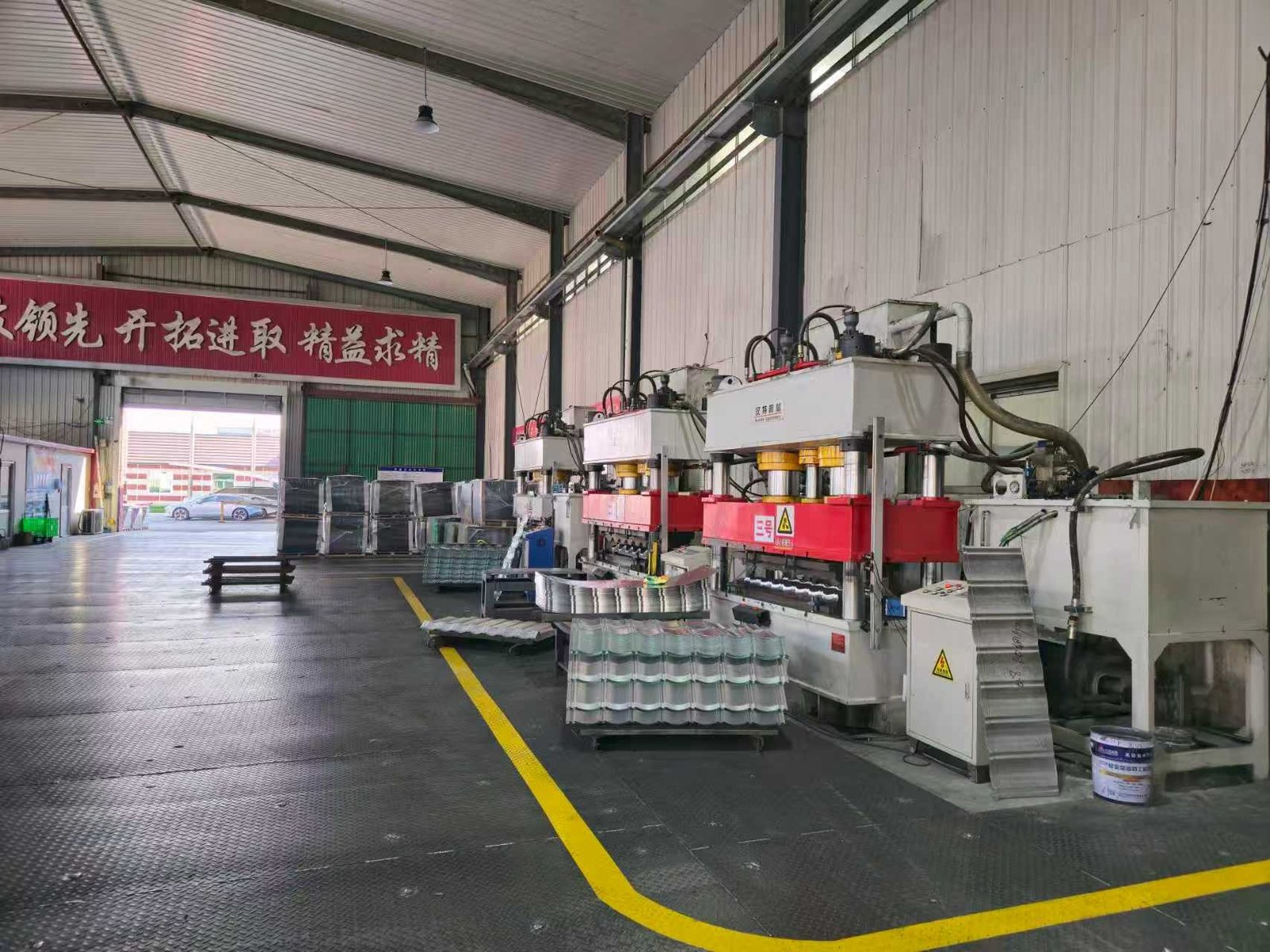
Residential, commercial and industrial roofs have different requirements for wind, span and foot traffic. Start with where and how the roof will be used.
Coastal and high-humidity regions benefit from a higher AZ coating; hail-prone regions benefit from thicker steel. Match the spec to the environment, not just the budget.
Request the full data sheet and lock down steel thickness, coating weight, tile size, weight per m², and granule type in writing.
Confirm batten spacing, overlap, fastener type and required accessories so the spec sheet and the installer's plan agree.
Ask for a physical sample plus the mill test certificate. Compare the sample against the data sheet before committing to a container.
A reliable manufacturer runs checks at each production stage. When vetting a supplier, ask whether their process includes:
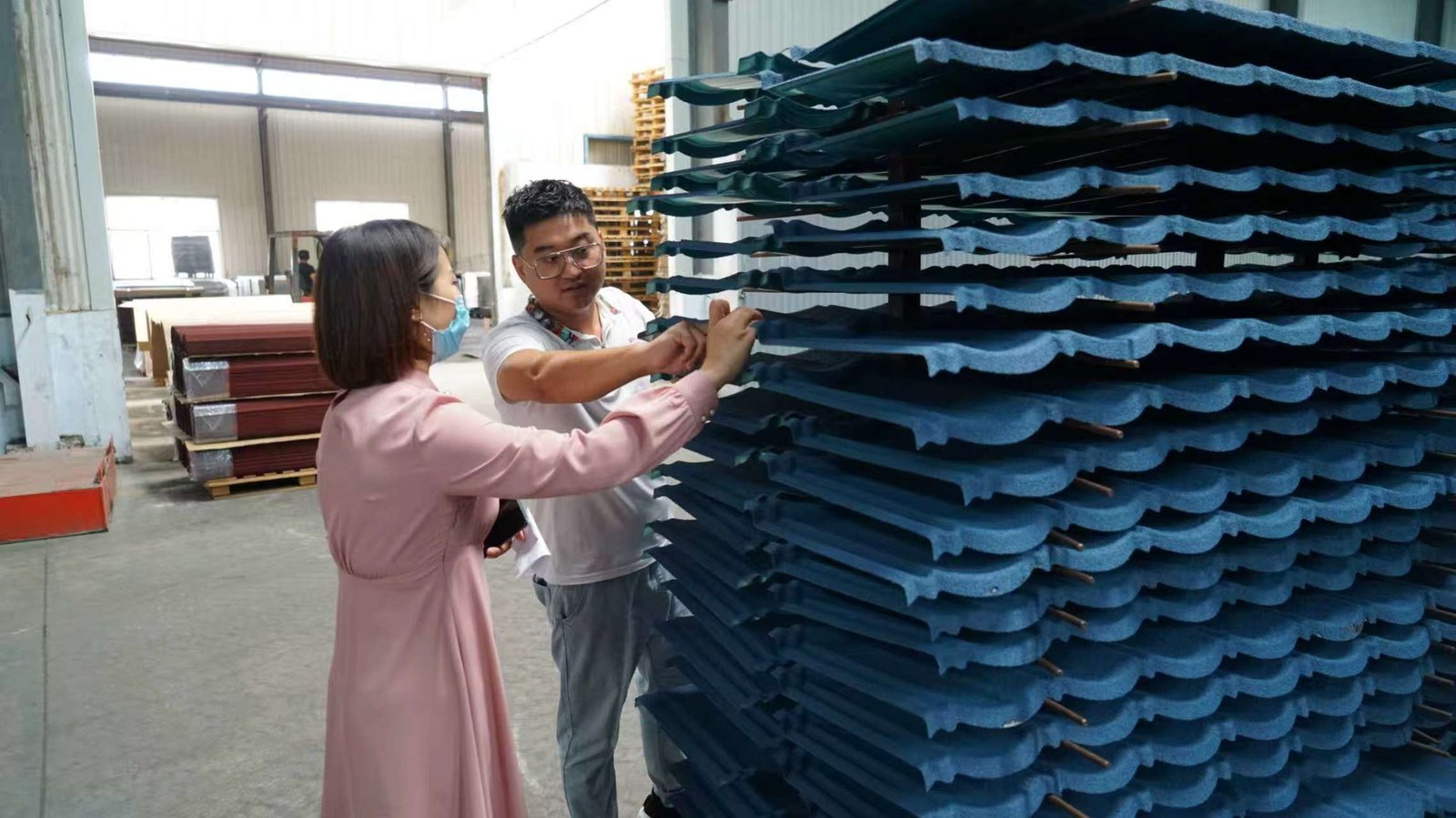
For a deeper look at the checks that protect your order, read our guide on how to choose a reliable stone coated metal roof tile manufacturer.
Correct packaging protects your specification on the journey from factory to site. Standard export packing uses wooden pallets and weatherproof wrapping, with bundles sized for safe handling. Because the tiles weigh only 6–7 kg/m², a container carries far more roof area than clay or concrete — which directly lowers your per-square-metre freight cost. Confirm your container loading and shipping terms (FOB, CIF, DDP) before quoting freight.
Two "identical" tiles at different prices almost always differ in steel thickness or coating grade. Compare the full spec, not just the headline price.
Tile size and overlap determine how many pieces you actually need per square metre. A slightly smaller tile can raise your total piece count and your cost.
A photo is not a specification. Approve a physical sample so the delivered product matches what you signed off on.
Ridge caps, flashing, fasteners and sealants are part of the roof system. Missing accessories delay installation and add cost later.
Logos on a website are not proof. Ask to see the actual certificate and confirm it covers the product you are buying.
0.40mm offers the best balance for most projects. Choose 0.45mm for hail-prone or large-span roofs and 0.35mm for budget residential work in mild climates.
AZ150 is a galvalume coating grade indicating roughly 150 grams of aluminium-zinc alloy per square metre (both sides combined). It is the common reference grade for corrosion resistance.
Around 6–7 kg per square metre — roughly one-sixth the weight of clay or concrete tiles, which typically removes the need for structural reinforcement.
Usually because of steel thickness, coating grade, granule quality, or the accessories included. Request the itemised specification sheet to compare fairly.
A mill test certificate for the steel, the product data sheet, and the relevant product certificates (such as ISO 9001 and CE where applicable).
Yes — Fuda Roofing offers a custom-length option for projects with non-standard requirements. Discuss your dimensions at the quoting stage.
Stone coated metal roof tile specifications are the difference between a roof that lasts 50 years and one that disappoints in 10. By pinning down steel thickness, coating grade, tile size and weight before you order — and verifying them with a sample and mill certificate — you protect both your margin and your reputation. A little specification discipline up front is the cheapest insurance in the roofing business.
Send us your preferred tile profile, quantity, destination port and project requirements. We'll reply with a detailed specification sheet and quote within 24 hours.
Request a Quote → Chat on WhatsApp影响彩石金属瓦价格和寿命的,往往不是外观,而是规格参数。本文从钢材基板厚度(0.35 / 0.40 / 0.45mm)、AZ150 镀铝锌涂层、瓦片尺寸(1340×420mm)与每平方米重量(约6–7kg)入手,解释每一项参数如何影响性能、成本与运输。文章还给出了五个选购步骤、常见采购误区、质量检测流程和下单前必查清单,帮助采购商在比价时看清"同款瓦"背后的真实差异,避免只看价格而忽略规格。