FUDA  ROOFING
ROOFING
+86 138 6922 6336
Watch Factory
ROOFING
If you're building near the coast, in a tropical zone, or anywhere with high humidity and salt-laden air, your roofing material choice is critical. Traditional roofing materials degrade fast in these environments — rust, mold, and structural weakening can cut a roof's lifespan in half. Stone coated metal roof tiles are engineered to solve exactly this problem. Here's what importers, contractors, and project developers need to know.
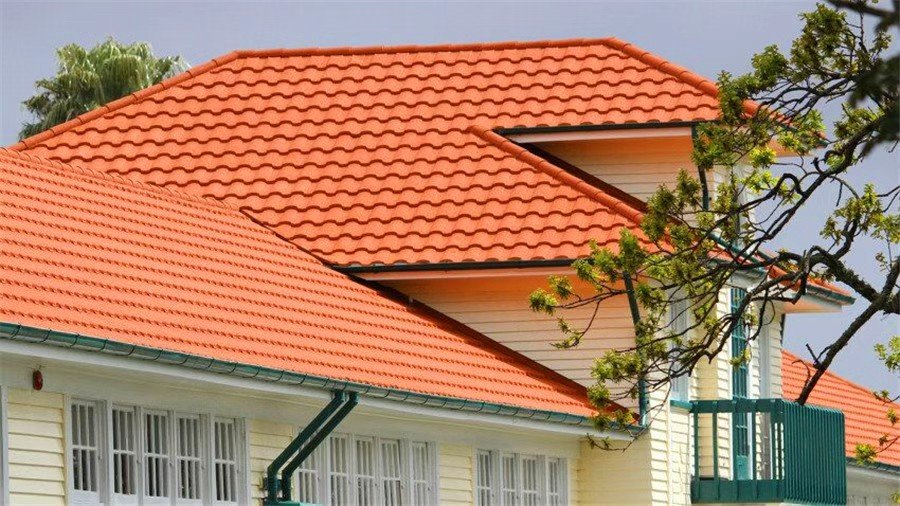
Coastal environments present three overlapping challenges that accelerate roof degradation:
Sea salt is highly corrosive. When salt-laden wind deposits sodium chloride on exposed metal surfaces, it initiates electrochemical corrosion — essentially turning your roof into a slow battery. Standard galvanized steel (G60 coating) can show visible rust within 3-5 years in coastal zones. Even painted steel degrades as salt penetrates microscopic paint pores.
Humidity levels above 70% create condensation cycles inside roofing systems. Organic materials (wood, asphalt) absorb moisture, swell, and eventually rot. Even seemingly durable materials like concrete tiles become porous over time, trapping moisture that freezes in cooler climates or feeds algae in warm ones.
Coastal zones combine extreme UV exposure (reflected off water) with salt spray — a combination that strips protective coatings faster than either factor alone. This "UV-salt synergy" is why many roofing warranties have separate, shorter coverage periods for properties within 5 km of saltwater.
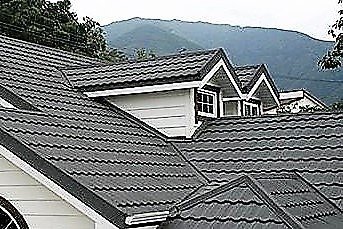
| Coastal Threat | How Stone Coated Steel Handles It |
|---|---|
| Salt spray corrosion | AZ150 aluminum-zinc alloy coating (150 g/m²) — the aluminum component forms a passive oxide layer that resists chloride attack. The zinc provides sacrificial protection at cut edges. Combined with the acrylic stone coating, the steel core is completely encapsulated. |
| High humidity / condensation | Zero organic content. Steel does not absorb water. The stone chip coating is mineral-based and inert. Properly installed with underlayment and ventilation, the system stays dry through humidity cycles. No swelling, no rot, no mold food source. |
| UV + salt synergy | The stone granule layer physically blocks UV radiation from reaching the steel and acrylic base. Natural stone is UV-inert — it doesn't chalk, fade, or break down. Color retention in stone coated tiles typically exceeds 25-30 years with only minor fading. |
| Wind uplift (typhoon/hurricane zones) | At 6-7 kg/m², stone coated steel is significantly lighter than clay (40-60 kg/m²). Light weight means less momentum during wind gusts. Combined with interlocking profiles and proper fastener specification, systems can be engineered for wind zones up to 200 km/h. |
When specifying stone coated metal roof tiles for coastal applications, pay attention to these technical parameters:
| Specification | Fuda Standard | Why It Matters for Coastal |
|---|---|---|
| Steel substrate | AZ150 galvalume (55% Al-Zn) | Aluminum component forms stable oxide barrier against chloride ions. 150 g/m² coating weight provides 2-3× the salt-spray life of G90 galvanized. |
| Base steel thickness | 0.35-0.45 mm (customizable) | Thicker substrate = longer time before any corrosion reaches structural steel. For direct oceanfront, consider 0.45 mm. |
| Stone coating | Natural basalt/silica granules, acrylic-bonded | Mineral granules are chemically inert — no reaction with salt. Acrylic binder is water-resistant and UV-stable. |
| Overglaze topcoat | UV-resistant clear acrylic | Seals stone granules, prevents moisture ingress between granules, adds second UV barrier. |
| Fasteners | Stainless steel (304 or 316) | For coastal zones within 5 km of saltwater, use 316 marine-grade stainless fasteners to prevent galvanic corrosion at attachment points. |
> Specifications may be adjusted for project requirements. Confirm the final technical data sheet before ordering.
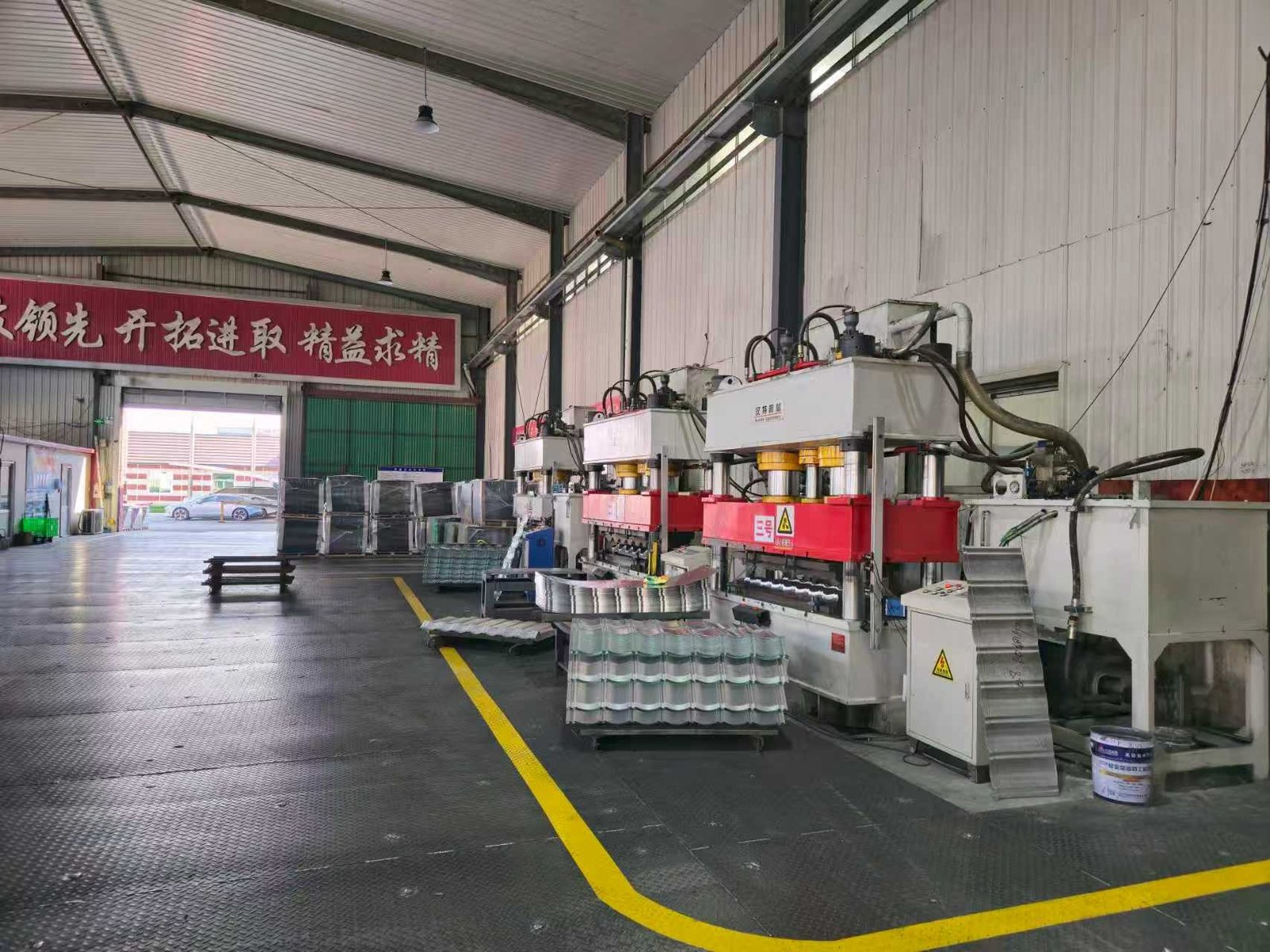
| Material | Coastal Lifespan (est.) | Key Coastal Issue |
|---|---|---|
| Stone Coated Steel (AZ150) | 40-50 years | Minimal issues with proper fastener specification. Edge protection recommended. |
| Clay / Concrete Tiles | 25-35 years | Porous surface absorbs salt and water. Freeze-thaw cycles cause cracking. Heavy weight requires reinforced structure. |
| Asphalt Shingles | 8-12 years | Organic felt base absorbs moisture. Salt accelerates granule loss. UV degrades asphalt binder. Wind uplift tears tabs. |
| Painted Metal (standard) | 10-15 years | Paint film develops microscopic cracks in salt+UV. Corrosion starts at scratches, cut edges, and fastener holes. |
| Wood Shakes | 5-10 years | Absorbs salt and moisture. Warps, splits, and rots. Hosts mold and wood-boring insects in humid conditions. |
This is the single most important coastal specification. Standard zinc-plated screws will corrode within 3-5 years within 5 km of saltwater. Specify 316 stainless steel for all fasteners, including ridge cap screws, flashing rivets, and gutter brackets. The small additional cost (typically +$0.30-0.50/m²) prevents fastener failure that can cascade into sheet loss during storms.
Cut edges — where the steel core is exposed — are the most vulnerable points. Apply zinc-rich touch-up paint or edge sealant to every field-cut edge, especially at hips, valleys, and ridges. Fuda includes touch-up kits with export orders for exactly this purpose.
Coastal humidity demands good attic/roof-space ventilation. Ridge vents, soffit vents, or mechanical ventilation prevent condensation buildup under the roof deck. A well-ventilated roof assembly stays dry inside, eliminating the conditions that cause structural timber decay even if the outer roof system is corrosion-proof.
Never let aluminum flashing touch the steel roof in coastal salt-spray zones — the galvanic reaction accelerates corrosion at the contact point. Use matching materials or separate with a non-conductive barrier (EPDM tape, neoprene washers).
Tell us your project location, roof area, and local climate conditions. We'll provide a technical specification tailored to your environment — including steel grade, fastener type, and installation recommendations.
Request Free Quote →Fuda Roofing exports to over 20 countries, many with demanding coastal and tropical climates. Here's where the product has proven itself in the field:
| Region | Climate Challenge | Performance |
|---|---|---|
| West Africa (Nigeria, Ghana) | High humidity, coastal salt, intense equatorial UV | AZ150 + stone coating handles the full tropical coastal package. No corrosion reports on properly installed projects. |
| Southeast Asia (Philippines, Vietnam) | Typhoon winds, monsoon rains, 80-90% humidity | Light weight reduces wind load. Interlocking profiles resist uplift. No water absorption issues during extended monsoon. |
| Middle East (UAE, Saudi Arabia) | Extreme UV, sand abrasion, occasional coastal salt (Gulf) | Stone granule surface resists sand scouring. UV-stable acrylic overglaze prevents chalking. Color held well. |
| Caribbean & Indian Ocean Islands | Direct oceanfront salt spray, hurricane winds | With 316 stainless fasteners and edge treatment, stone coated steel outperforms all organic roofing. Minimal maintenance. |
Standard galvanized steel (G60/G90) uses zinc-only coating. In salt spray, zinc corrodes sacrificially — which is the intended behavior — but it depletes fast. AZ150 aluminum-zinc alloy is specifically engineered for marine/coastal environments and lasts 2-3× longer in standardized salt spray testing (ASTM B117). Always specify AZ150 or better.
We see this constantly: the roof tile spec is correct, but the contractor uses standard zinc-plated screws. Within 2 years, rust streaks appear at every fastener. The roof itself is fine but the attachment points are failing. Replace the fasteners and you replace the labor — far more expensive than getting it right initially.
For large coastal projects, request a physical sample and expose it on-site for 2-3 months before placing the full order. This lets you verify real-world performance in your specific microclimate. Fuda provides free samples for qualified projects.
Q: How close to the ocean can I use stone coated metal roof tiles?
A: Stone coated steel is suitable for direct oceanfront installations — properties right on the beach. The key is using 316 marine-grade stainless fasteners and properly treating cut edges. The AZ150 steel core and stone coating handle salt spray without issue.
Q: Do stone coated tiles rust in tropical humidity?
A: No. The steel core is completely encapsulated by the aluminum-zinc coating and the stone granule layer. Unlike painted metal roofs where the paint can develop pinholes, the stone coating provides a thick, continuous physical barrier. Condensation on the underside is managed by proper underlayment and ventilation.
Q: What's the difference between AZ150 and standard galvanized for coastal use?
A: AZ150 contains approximately 55% aluminum in the coating alloy. The aluminum forms a stable, passive oxide barrier that resists chloride attack from salt. Standard galvanized is pure zinc, which corrodes sacrificially — it protects the steel but depletes much faster in salt environments. In ASTM B117 salt spray testing, AZ150 typically lasts 2-3× longer than G90 galvanized.
Q: Can stone coated tiles handle hurricane-force winds?
A: Yes. At only 6-7 kg/m², stone coated steel exerts far less wind load than heavy clay or concrete tiles. The interlocking profile design distributes wind forces across multiple tiles. With proper fastener spacing and pattern, systems can be engineered for wind zones up to 200 km/h. Always confirm the specific wind rating for your chosen profile with the manufacturer.
Q: Do I need special underlayment for coastal installations?
A: In high-humidity coastal zones, we recommend a synthetic breathable underlayment rather than traditional felt. Synthetic underlayments are dimensionally stable (no wrinkling from humidity), provide better tear resistance for wind uplift, and allow moisture vapor to escape from the roof deck. This prevents trapped condensation — a common problem in humid coastal climates.
Q: How does the warranty work for coastal installations?
A: Fuda Roofing provides material warranty coverage for all installations when proper fasteners (316 stainless for coastal) are used and installation follows our technical guidelines. The stone coated steel itself carries a long-term material warranty. For project-specific warranty terms, contact our export team with your location and project details.
Stone coated metal roof tiles are one of the best roofing material choices for coastal and humid climates. The combination of AZ150 aluminum-zinc steel, full-encapsulation stone coating, lightweight design, and inorganic construction addresses every major coastal degradation mechanism — salt corrosion, humidity absorption, UV breakdown, and wind uplift. When installed with 316 stainless fasteners and proper edge treatment, stone coated steel delivers a 40-50 year service life even in aggressive marine environments — outperforming clay, concrete, asphalt, and standard metal roofing at a competitive installed cost.
在沿海、热带和高湿度地区选择屋顶材料时,彩石金属瓦是表现最佳的选择之一。本文详细分析了AZ150镀铝锌钢芯、丙烯酸石粒涂层和全无机结构如何应对沿海环境的三大挑战:盐雾腐蚀、持续高湿度和UV+盐分的双重侵蚀。与粘土瓦、沥青瓦和普通彩钢瓦相比,彩石金属瓦在沿海地区可提供40-50年的使用寿命,同时重量仅为6-7kg/m²,大幅降低结构负荷和台风/飓风风险。文中还提供了沿海项目的安装最佳实践、紧固件选型指南和完整的采购清单。对于计划在沿海地区建设项目或出口到沿海市场的进口商、承包商和开发商,这篇文章提供了全面的技术参考。
Written by: Fuda Roofing Export Team · Last updated: 2026-08-03