FUDA  ROOFING
+86 138 6922 6336
Watch Factory
ROOFING
Winter is the harshest test a roof ever faces. Heavy snow, repeated freeze-thaw cycles, and ice dams at the eaves are what quietly destroy conventional roofs in cold regions — and what many buyers forget to plan for when choosing a roofing material. Stone coated metal roof tiles were originally engineered for exactly this kind of climate. Here is how they perform in snow and cold, where they need help from good installation, and what to look for before you buy.
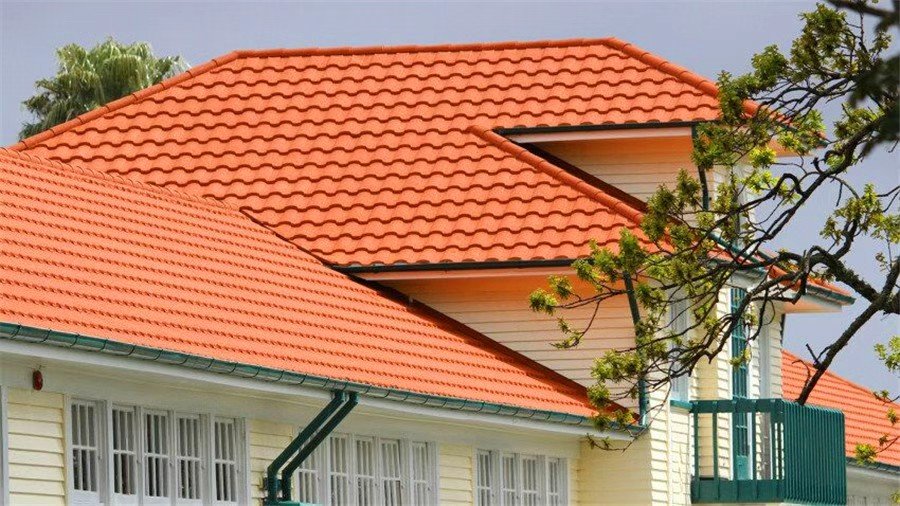
Cold regions attack a roof through three separate mechanisms, and a good roofing material has to answer all three:
Conventional clay and concrete tiles fail primarily on the first two. Asphalt shingles fail on the third, and on freeze-thaw as they age and lose granules. Stone coated metal tiles are built to sidestep all three — with one important caveat covered below.
Snow load is a live load, and every roof structure is engineered for a design snow load set by local building code. A roofing material cannot change that requirement — but it can change how much of the structure's capacity is already used up before the first snowflake falls.
Stone coated metal roof tiles are a lightweight product. The tile itself is a thin steel sheet (typically 0.35–0.45 mm) carrying a mineral granule coating, and it weighs roughly 6–8 kg per square metre. Concrete tiles, by comparison, commonly run 40–60 kg per square metre, and clay tiles are in a similar range. On a large roof that difference is measured in tonnes of dead load.
That margin matters in heavy-snow regions. A lightweight roof means the structure is carrying less of its own weight, leaving more capacity for snow before deflection or stress becomes a concern — and it makes stone coated metal a practical choice for retrofit projects where an older structure was never designed for heavy concrete tiles.
What to check: confirm the steel substrate and base thickness on the supplier's data sheet. A 0.35 mm AZ150 galvalume steel core with a proper granule coating gives you the lightweight profile without sacrificing stiffness. Fuda Roofing specifies AZ150 galvalume steel on a 0.35–0.45 mm base.
One of the quiet advantages of a metal roof in winter is that snow tends to slide off rather than sit and accumulate. The stone granule surface is textured enough to slow the slide, while the smooth, rigid tile profile and the side interlock let snow release in a controlled way as the sun hits the roof or the interior warms it slightly.

This is a real benefit, but it comes with a responsibility. In regions with heavy snowfall, a metal roof that sheds snow well should be paired with snow guards above doorways, walkways, and gutters. Snow guards hold the snow pack on the roof and let it release gradually, preventing a sudden, dangerous avalanche of snow and ice onto people or property below. This is standard practice for any metal roof in snow country — including stone coated metal.
Profile choice also matters. A high-wave profile such as the Roman tile channels water and snowmelt down defined valleys, while flat shingle-style profiles present a cleaner plane for snow to slide across. Both work in cold climates; the right choice depends on the slope and the look you want.
This is where stone coated metal tiles separate themselves from clay and concrete. Clay and concrete are porous: they absorb a small amount of water, and in freezing weather that water expands inside the tile, causing hairline cracks that widen year after year. In cold climates, clay and concrete roofs are notorious for chipping, spalling, and eventual breakage at exactly the freeze-thaw line.
A stone coated metal tile does not work that way. Its core is a continuous sheet of coated steel — there is no porous body to absorb water. The stone granules sit on the surface, bonded with acrylic resin, and the whole thing is sealed with a UV-stable overglaze. Water simply cannot get into the tile body and freeze there, which is why the tile profile stays intact through decades of winter cycling.
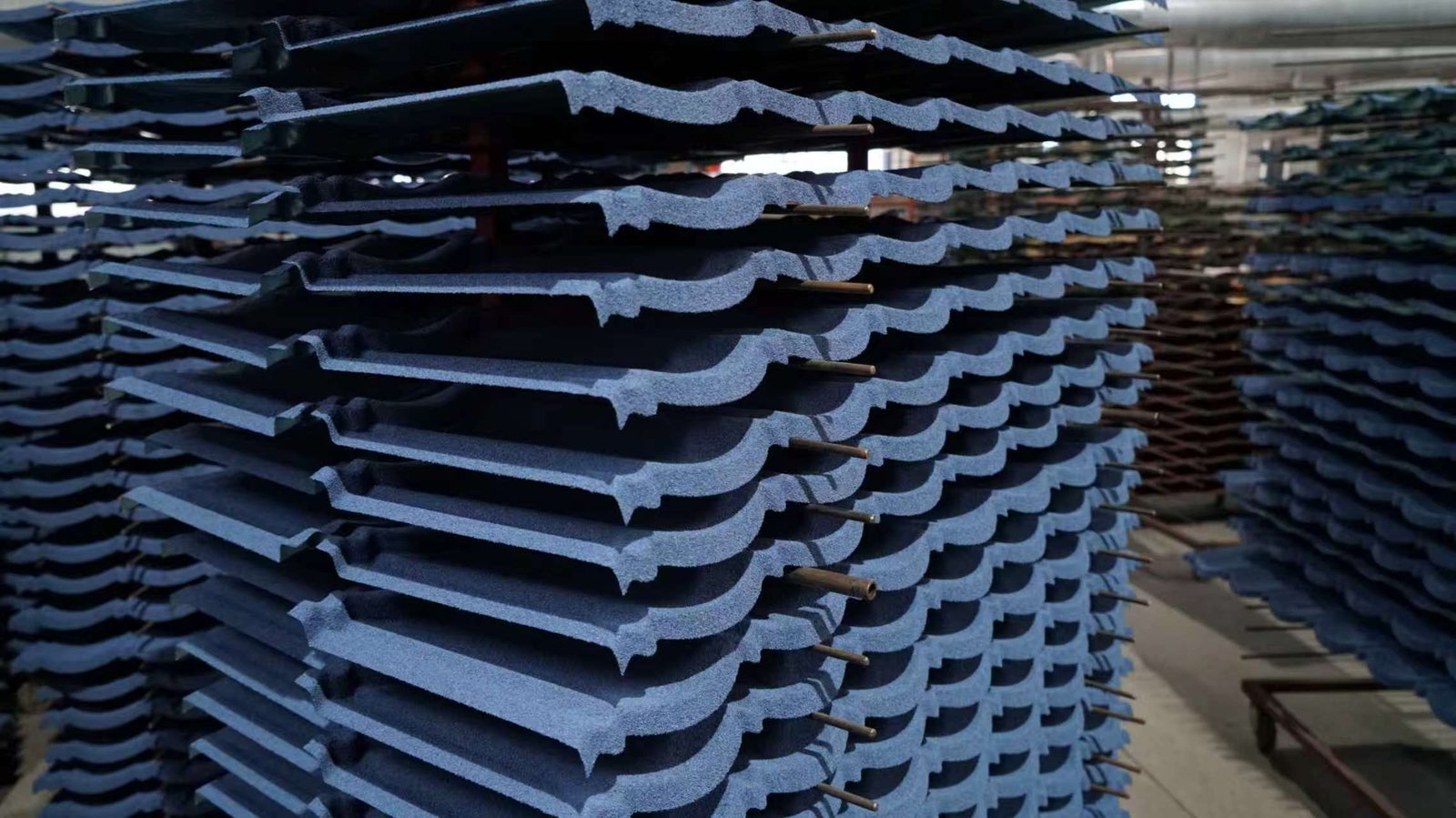
The one place a stone coated metal tile can fail in winter is at the surface — not the structure. If the acrylic resin was under-cured, or the granules were poorly sized and applied, repeated freeze-thaw cycles plus snow sliding can loosen and strip the stone coating. Within a few winters you get bald patches, exposed resin, and eventually exposed steel.
This is a manufacturing-quality question, not a material question. A tile with properly cured resin and uniform granule coverage holds its stone layer through winter after winter. It is the main reason we advise buyers to inspect a physical sample and to look for consistent granule coverage and a clean, sealed surface before ordering.
Ice dams are frequently blamed on the roofing material, but they are actually a building-envelope problem. An ice dam forms when the attic is warmer than the freezing air outside, so snow on the upper roof melts, flows down, and refreezes where the roof overhangs the cold eave. The ice builds up into a ridge that dams the water behind it, and that pooled water works its way under the roofing and into the structure.
No roofing material — metal, tile, or shingle — can stop an ice dam by itself, because the water is driven from above by heat loss. Prevention lives in three places:
Get these three right and a stone coated metal roof will shrug off winter. Skip them and even the best tile will leak — not because of the tile, but because the roof system underneath it was never finished.
| Detail | Why It Matters in Cold Climates |
|---|---|
| Self-adhering eave underlayment | Stops meltwater from ice dams reaching the roof deck |
| Attic ventilation | Keeps the roof deck cold and prevents uneven snowmelt |
| Snow guards above openings | Prevents sudden snow avalanches onto people and gutters |
| Corrosion-resistant fasteners | Fasteners take the brunt of moisture and freeze-thaw at the fixings |
| Sealed valleys and ridges | Valleys carry the heaviest meltwater flow in winter |
| Material | Weight | Freeze-Thaw | Snow Shedding |
|---|---|---|---|
| Stone coated metal | Very light (~6–8 kg/m²) | Excellent — sealed steel core | Good — smooth interlocking profile |
| Clay tile | Heavy (~40–60 kg/m²) | Poor — porous, cracks over time | Fair — rough surface holds snow |
| Concrete tile | Heavy (~40–60 kg/m²) | Poor — porous, spalls | Fair — rough surface holds snow |
| Asphalt shingle | Moderate | Fair — degrades with age | Poor — holds snow, promotes ice dams |
Fuda Roofing manufactures nine stone coated metal roof tile profiles on AZ150 galvalume steel, with a sealed, freeze-thaw-resistant surface. Request a free sample and technical data sheet to verify granule adhesion and coating quality for yourself.
Request Free Sample & Quote →Q: Can stone coated metal roof tiles handle heavy snow load?
A: Yes. They are a lightweight material, so they add far less dead load to the structure than concrete or clay tiles, leaving more structural capacity for snow. The roof still needs to be engineered for the local design snow load, and in heavy-snow regions snow guards should be fitted above openings.
Q: Do stone coated metal roofs get ice dams?
A: Ice dams form from heat loss through the building, not from the roofing material. A stone coated metal roof with proper attic insulation, ventilation, and a self-adhering waterproof underlayment at the eaves is well protected against ice dams. The material itself sheds snow and resists the water that ice dams trap.
Q: Do the tiles crack in freezing weather like clay or concrete?
A: No. Clay and concrete are porous and crack when trapped water freezes and expands. Stone coated metal tiles have a sealed steel core with no porous body to absorb water, so they resist freeze-thaw damage. The surface stone coating must be well-cured to avoid granule loss over time.
Q: Will snow and ice damage the stone coating?
A: A properly manufactured tile keeps its stone coating through winter after winter. The risk is on cheap tiles where the acrylic resin was under-cured and granules are loose — repeated freezes and snow sliding can then strip the surface. Inspect a sample for uniform, well-adhered granules before buying.
Q: Do I need snow guards with a stone coated metal roof?
A: In regions with regular snow, yes. Because the smooth profile sheds snow well, snow guards above doorways, walkways, and gutters let the snow release gradually rather than sliding off in a single dangerous mass.
Stone coated metal roof tiles are one of the strongest material choices for snow and cold climates. They are light, so they do not overburden the structure; their sealed steel core shrugs off the freeze-thaw cycles that crack clay and concrete; and their smooth interlocking profile lets snow shed in a controlled way. The two things that decide winter performance are manufacturing quality — a well-cured stone coating that will not strip over repeated freezes — and installation — ventilation, waterproof eave underlayment, snow guards, and correct flashing. Get those right and a stone coated metal roof will carry you through decades of winters. When you source, demand the data sheet, inspect a sample, and choose a manufacturer that is open about its steel substrate and coating process.
冬季是屋顶最严苛的考验:积雪荷载、反复冻融循环以及屋檐处的冰坝,都是寒冷地区传统屋面材料被悄然破坏的原因。本文分析了彩石金属瓦在冰雪气候下的表现。彩石金属瓦自重极轻(每平方米约 6–8 公斤),远低于混凝土瓦和陶土瓦的 40–60 公斤,减轻了屋面结构的恒载、为积雪活载留出更多余量。其表面石粒虽粗糙但瓦型平滑且带侧向锁扣,有利于积雪受控滑落而非堆积。最关键的是,彩石金属瓦以整张镀铝锌钢板为芯材、没有多孔瓦体吸水,因而从根本上抵抗冻融开裂——这正是陶土瓦和混凝土瓦在寒冷地区开裂、剥落的主因。文中同时指出两大决定性因素:一是制造质量,石粒涂层若树脂固化不足、颗粒附着不牢,反复冻融和积雪滑动会剥落表面涂层;二是安装质量,冰坝本质是建筑保温通风问题,而非材料问题,须配合檐口自粘防水垫层、屋面通风、雪挡装置与正确的泛水搭接。对于在寒冷地区采购彩石金属瓦的进口商和承包商,本文提供了实用的选材与安装清单。
Written by: Fuda Roofing Export Team · Last updated: 2026-11-16