FUDA  ROOFING
+86 138 6922 6336
Watch Factory
ROOFING
If you are building in a hurricane zone, a typhoon belt, or any region where strong gusts are a fact of life, the roof is the first part of the building the wind attacks. Wind does not just blow against a roof — it creates uplift, a suction force that tries to peel the roof off from above. The material you choose, the shape of the tiles, and the way they are fastened together all decide whether the roof stays put or ends up scattered across the neighborhood. Stone coated metal roof tiles are widely used in wind-prone regions for a simple reason: their interlocking profile, lightweight steel core, and screw-down fastening system work together to resist uplift far better than loose, individually-nailed tiles. Here is how that works, and what to look for when you specify a roof for high winds.
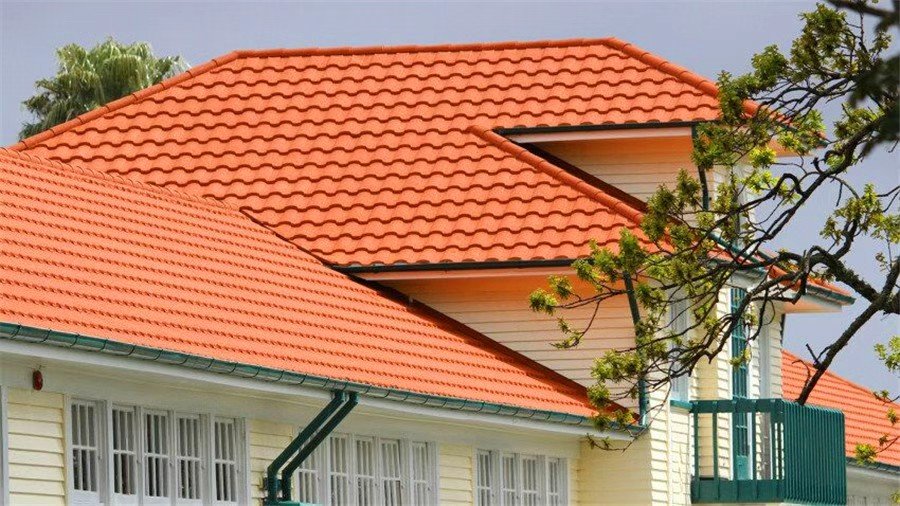
Most people imagine wind hitting a roof from the side. In reality, the destructive force is uplift — a negative pressure that forms on the windward slope and over the ridge as air accelerates over the roof surface. Fast-moving air has lower pressure than still air, so the faster the wind, the stronger the suction pulling the roof covering upward.
Three effects combine during a storm:
This is why a roof's wind performance is rarely about the tile breaking. It is about the tile staying attached — to its neighbors and to the deck — when thousands of pounds of suction are trying to separate them.
Traditional clay or concrete tiles are individual, overlapping pieces. Each one carries its own weight and relies on gravity plus a nail or two to stay put. In a strong gust, a single loosened tile becomes a lever, and once one goes, the wind gets under the rest and the failure cascades.
Stone coated metal roof tiles are different. Each tile is formed with a profiled interlocking edge — a rib and channel geometry that locks the side lap and head lap of one tile into the next. When the tiles are locked together, the roof behaves as a single continuous membrane rather than thousands of separate pieces. Uplift force is distributed across the entire panel, so the wind has to overcome the whole interlocked field at once, not one tile at a time.

This interlocking geometry is the single most important wind-resistance feature of a stone coated tile. When you compare profiles, look for a pronounced, well-defined interlock at both the side lap and the head lap — a shallow or loose fit is a warning sign, because wind will find the gap and start prying.
Stone coated metal roof tiles are built on a galvalume steel substrate — a galvanized steel core with an aluminum-zinc alloy coating, typically AZ150 (150 g/m² coating weight). The steel gives the tile its structural backbone; the aluminum-zinc coating is what protects it from corrosion for decades.
The steel core matters for wind resistance in two ways that often get overlooked:
Note that the lightweight does not mean the roof is easy to blow off — the opposite. Because the tiles are mechanically screwed to the deck and interlocked with each other, the low weight reduces load while the fastening and interlocking provide the hold-down force. It is a combination that heavy, gravity-dependent tiles cannot match.
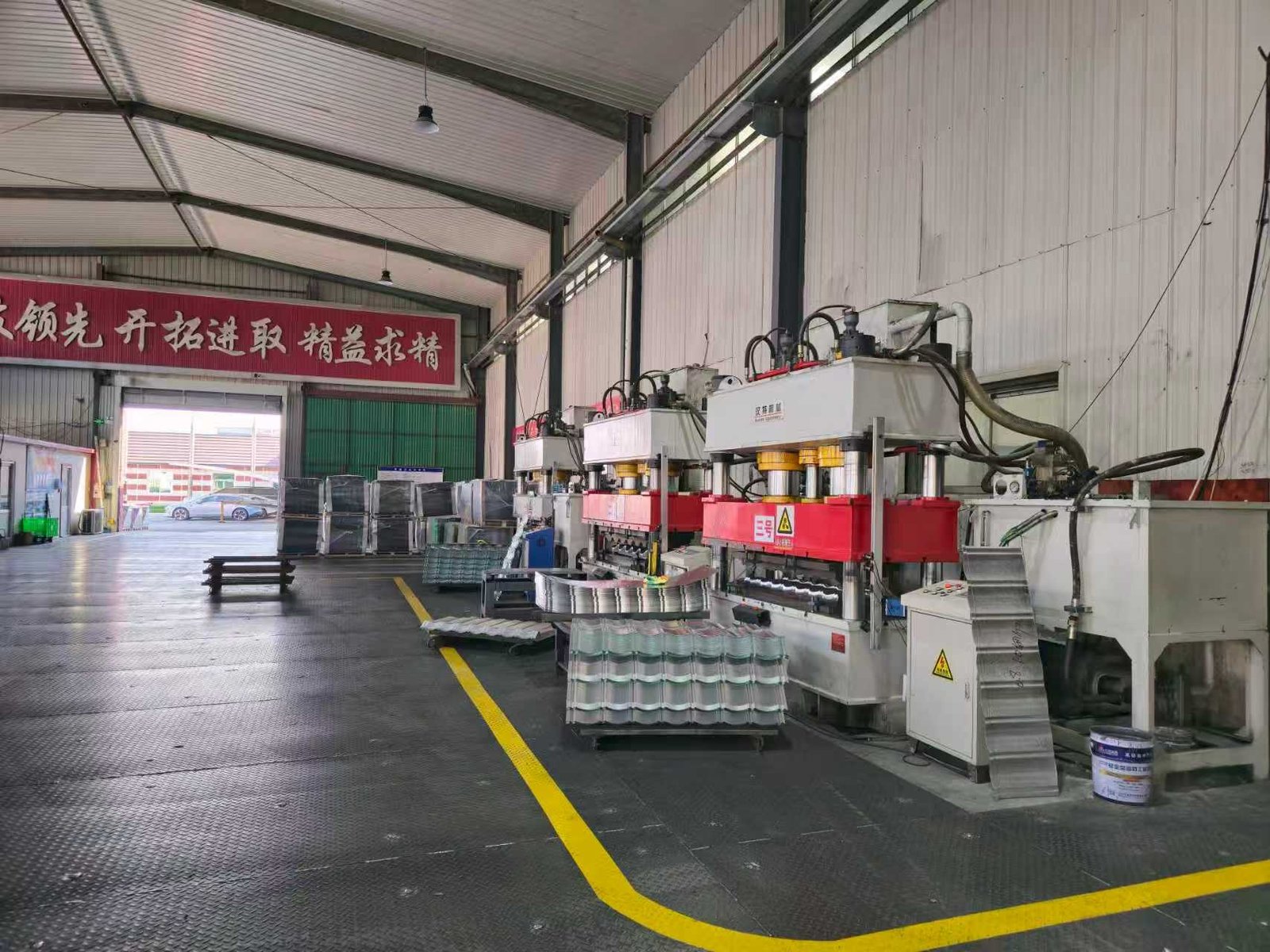
Even the best interlocking tile is only as strong as its attachment to the deck. Stone coated metal tiles are installed with mechanical fasteners — screws — driven through the tile into the roof deck (or batten), rather than nails or adhesive. Screws provide a positive, clamped connection that resists pull-out far better than a nail, and unlike adhesive, they do not soften in heat or age.
Fastening practices that directly affect wind performance:
The takeaway: specify a wind-rated tile, and insist on a crew that follows the manufacturer's fastening schedule to the letter — especially at the edges.
| Roofing Material | Wind Behavior |
|---|---|
| Stone coated metal | Interlocked panels + screw fastening; lightweight; resists uplift as a continuous field |
| Asphalt shingles | Adhesive tabs soften in heat and age; high failure rate at edges in storms; frequent re-nailing needed |
| Clay / concrete tile | Heavy but gravity-dependent; individual tiles can loosen and become projectiles; brittle under flex |
| Standing seam metal | Good uplift resistance, but typically more expensive and a different aesthetic than stone coated |
Asphalt shingles are the most common point of comparison. Their self-sealing adhesive strips — the thing that holds each shingle to the one below — lose grip over time under UV and heat, and a strong storm can lift entire courses starting from a single loose edge. Stone coated metal tiles avoid this failure mode entirely because they are mechanically fastened, not glued.
When a roofing product is described as wind-resistant, the claim should be backed by test data and a standard, not a marketing sentence. In international markets, roof wind resistance is commonly evaluated against test standards that measure the uplift pressure a fastened assembly withstands, often expressed as a wind speed or pressure rating (for example, wind-load classes used in regional building codes).
When you source stone coated metal roof tiles for a high-wind project, ask the manufacturer for:
A manufacturer that can supply these documents on request is treating wind performance as an engineering matter, not an afterthought. If the answer is vague, treat it as a red flag — especially for a coastal or storm-prone project.
What to ask a supplier: "Can you provide the fastening schedule and wind-uplift test report for the assembled system, including edge-zone details?" A supplier that answers with specifics — fastener count, placement, and a test standard — is treating your roof as a wind-rated assembly, not just selling tiles.
Q: Are stone coated metal roofs good in hurricanes?
A: Yes — when correctly specified and installed, they are among the more wind-resistant roofing options. The interlocking profile spreads uplift across the whole roof, the lightweight AZ150 steel core reduces structural load, and mechanical screw fastening keeps tiles anchored to the deck. Wind performance depends on following the manufacturer's fastening schedule, especially at eaves, ridges, and corners.
Q: Can strong wind lift stone coated metal roof tiles off?
A: The interlocked field and screw fastening are designed specifically to resist this. Failures almost always trace back to under-fastening, skipping the edge-zone reinforcement, or installing over a weak deck — installation errors rather than the material itself.
Q: Is a lightweight metal roof more likely to blow away?
A: No. The opposite concern applies. Light weight reduces dead load on the structure, while hold-down comes from the screws and interlock — not from the tile's weight. Heavy clay tiles rely on their own mass and gravity, and a loosened tile becomes a dangerous projectile in a storm.
Q: What should I check to ensure my roof is wind-resistant?
A: Confirm the tile uses AZ150 galvalume steel with a well-defined interlocking profile, verify the manufacturer's fastening schedule is followed (including edge and corner reinforcement), and request wind-uplift test reports for the assembled system before ordering.
Q: How does wind resistance relate to the roof's lifespan?
A: They go together. A roof that survives repeated storms without losing tiles, breaking seals, or developing leaks is a roof that lasts. Wind-resistant construction protects the roof's long-term integrity — which is why wind performance and durability are usually discussed together.
Fuda Roofing manufactures nine interlocking stone coated metal roof tile profiles in AZ150 galvalume steel, with documented fastening schedules and technical data sheets. Request a free sample and wind-performance documentation for your project.
Request Free Sample & Quote →Wind resistance in a stone coated metal roof is a system property, not a single material spec. It comes from three things working together: a well-defined interlocking profile that turns thousands of tiles into one continuous surface, an AZ150 galvalume steel core that is strong yet light, and mechanical screw fastening that anchors the field to the deck — reinforced at the edges where uplift peaks. When all three are done right, the result is a roof that shrugs off gusts that would strip shingles or send clay tiles flying. For hurricane and typhoon regions, specify the tile, verify the interlock, follow the fastening schedule, and demand the test data. That is the difference between a roof that survives the storm and one that does not.
彩石金属瓦之所以在飓风、台风等强风地区表现优异,核心在于三点相互配合:一是瓦片之间的咬合(interlocking)结构——相邻瓦片通过侧边和端边的锁扣相互连接,将整片屋面连成连续的整体,风揭力被分散到整个屋面,而不是作用在某一片瓦上;二是以 AZ150 镀铝锌钢板为基材,强度高、自重轻(约为陶土瓦/混凝土瓦的六分之一到七分之一),既减轻了屋面结构的自重负担,又不会像传统重瓦那样因松动而成为危险飞溅物;三是采用螺钉机械紧固(而非钉子或粘胶),把瓦片牢牢锚固在屋面板上,并在檐口、屋脊、转角等风揭力最大的部位加强固定。文中还对比了彩石金属瓦与沥青瓦、陶土瓦、混凝土瓦在强风下的表现,并强调安装质量至关重要——再好的瓦型,如果紧固件数量不足、收边处理不到位,也会在风暴中失效。对于位于沿海或飓风/台风多发地区的项目,选择咬合结构可靠、基材等级高的彩石金属瓦,严格按厂家紧固方案安装,并要求提供抗风揭测试报告,是保证屋面在狂风中完好无损的关键。
Written by: Fuda Roofing Export Team · Last updated: 2026-10-12