FUDA  ROOFING
+86 138 6922 6336
Watch Factory
ROOFING
When builders and homeowners compare roofing materials, weight rarely gets the attention it deserves — yet it is one of the most consequential properties a roof can have. It decides whether you can install over an existing roof, whether the framing needs reinforcement, and how much you will pay to ship the material to site. Stone coated metal roof tiles sit at the light end of the spectrum, and that single fact quietly drives savings across the entire project. This guide explains how much a stone coated metal roof weighs, why that lightness matters, and how it translates into real-world advantages.
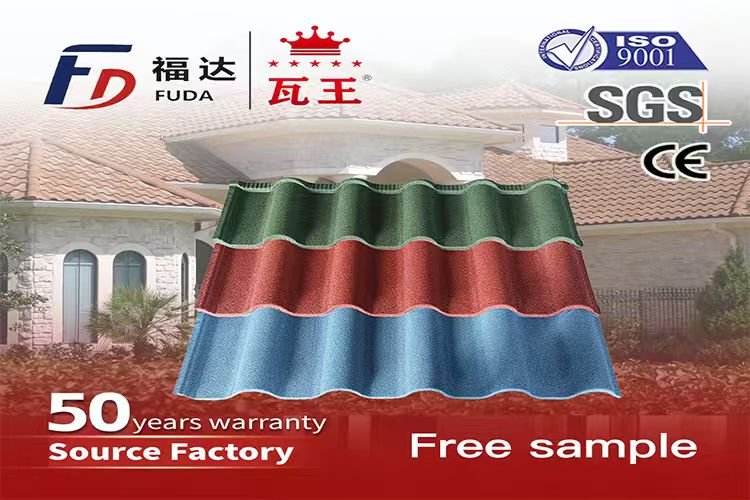
The short answer is roughly 6–7 kilograms per square metre. That figure comes from the product itself: a roll-formed steel panel with a thickness of 0.35–0.45 mm, coated in an aluminum-zinc (galvalume) alloy and finished with a layer of stone granules bonded in acrylic resin. A standard tile measures about 1340 × 420 mm, and the entire assembly — steel, coating, and stone — still lands at only a fraction of the weight of traditional heavy roofing.
To put that number in context, here is how stone coated metal roof tiles compare with the most common alternatives:
| Roofing Material | Typical Weight (approximate) |
|---|---|
| Stone coated metal tile | ~6–7 kg/m² |
| Asphalt shingles | ~10–15 kg/m² |
| Natural slate | ~30–60 kg/m² |
| Clay tiles | ~40–60 kg/m² |
| Concrete tiles | ~40–70 kg/m² |
In other words, a stone coated metal roof carries only one-sixth to one-tenth of the dead load of a clay or concrete roof covering the same area. For a typical residential roof of 150 m², the difference between a stone coated metal roof and a concrete tile roof can amount to several tonnes of load sitting on the building structure.
Every roof imposes a dead load — the permanent weight of the materials themselves — on the rafters, trusses, load-bearing walls, and ultimately the foundation. Heavy materials such as clay and concrete force the structure to be designed around that burden, which means thicker timbers, closer rafter spacing, and stronger footings. Stone coated metal roof tiles flip that equation.
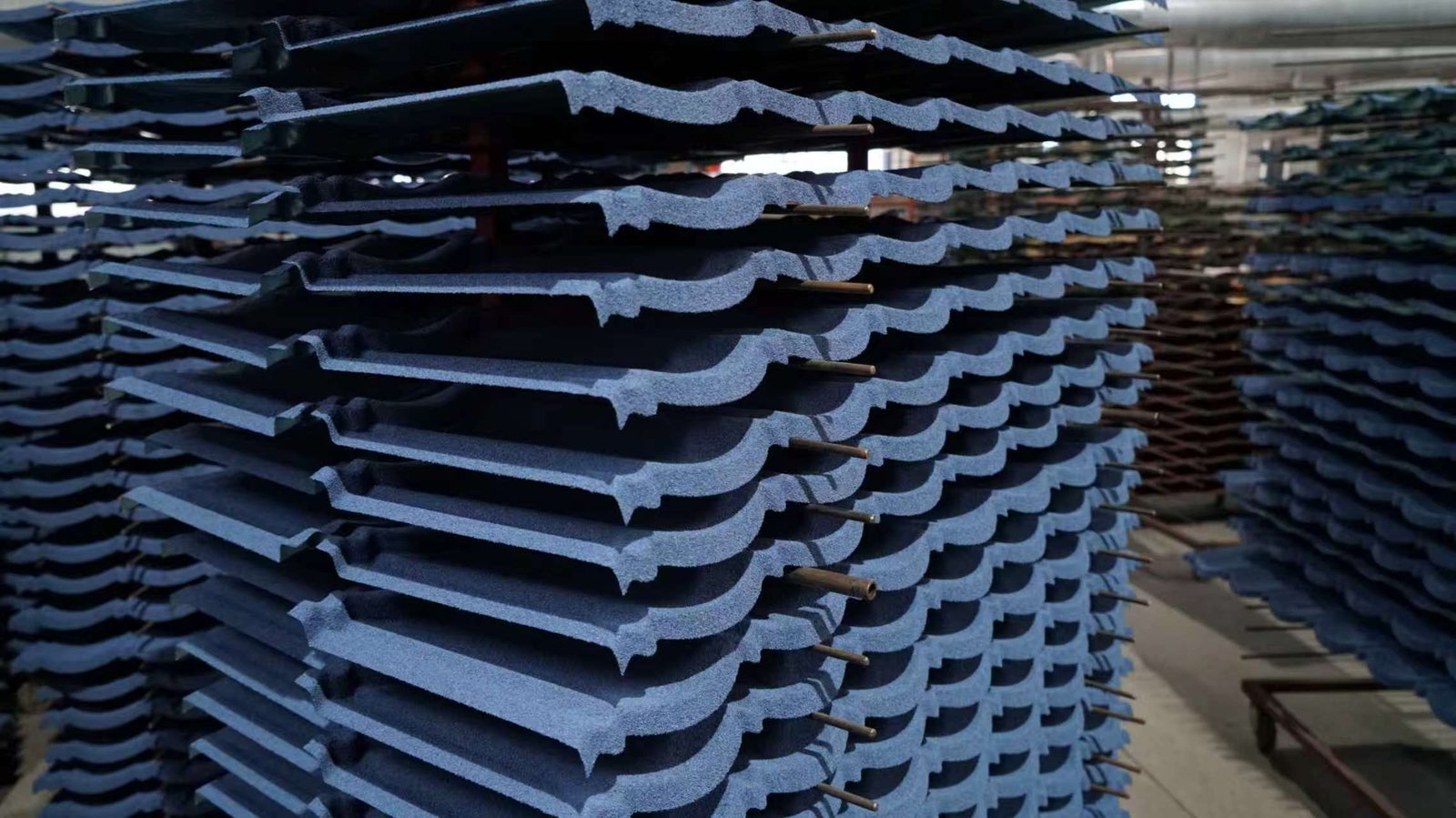
A common concern when a material is described as "lightweight" is that it must be flimsy. That is not the case here. The weight of a stone coated metal tile is low because steel is strong for its weight, not because the product is thin on substance. The tile is built on a galvalume steel core — steel coated with an aluminum-zinc alloy (typically AZ150) that resists corrosion — and roll-formed into an interlocking profile that adds rigidity. The stone granule layer bonded on top protects the surface from impact and UV while giving the roof its traditional appearance.
The result is a product that is light enough to lift easily but strong enough to be engineered for a 40–50 year service life, with the impact, fire, and wind-resistance characteristics of metal roofing. You are not trading durability for low weight — you are getting both.
One of the most valuable practical consequences of a lightweight roof is the ability to retrofit over an existing roof. With heavy clay or concrete, a re-roof almost always means a full tear-off, because the old structure was never designed to carry that much additional weight. Stone coated metal tiles change the calculus.
Because the tiles are light, they can frequently be installed directly over the existing roof deck using a batten system — timber or metal battens fixed to the existing roof that the tiles are then screwed onto. This approach delivers several benefits:
That said, a retrofit should always start with an inspection of the existing structure and its condition, and the decision should be made with a qualified contractor or engineer. Light weight makes retrofit possible — it does not replace due diligence.
Weight drives freight cost, and freight is often the hidden line item that decides whether an imported roofing material is economical. Because stone coated metal tiles weigh only 6–7 kg/m², a single shipping container carries a far greater roof area than the same container filled with clay or concrete tiles. That means the per-square-metre shipping cost falls dramatically, which matters whether you are a homeowner ordering locally or an importer buying whole containers for distribution.
This is one of the reasons stone coated metal roof tiles from a manufacturer like Fuda Roofing — produced at our factory in Dezhou, Shandong, China and exported to markets around the world for more than 20 years — remain competitive even after the cost of ocean freight is added. The same properties that lighten the load on a building also lighten the load on the budget.
A light roof does not mean a roof that lifts off in a storm. Stone coated metal tiles interlock and are mechanically fastened through the batten system, which gives them strong resistance to wind uplift. And because the roof is light, it places less demand on the building during extreme events — a lighter roof means less load pulling on the structure in high winds and earthquakes. If you are building in a storm-prone region, weight is one factor among several; wind resistance, fastening, and profile design all matter too, which we cover in our dedicated guide on wind resistance.
Fuda Roofing manufactures nine stone coated metal roof tile profiles on AZ150 galvalume steel at roughly 6–7 kg/m² — light enough for retrofit, strong enough for a 40–50 year service life. Request a free sample and the full data sheet to check the weight and specifications for yourself.
Request Free Sample & Data Sheet →Q: How much does a stone coated metal roof weigh per square metre?
A: Around 6–7 kilograms per square metre. That is roughly one-sixth the weight of clay or concrete tiles, which typically weigh in the range of 40–70 kg/m².
Q: Can I install stone coated metal roof tiles over my existing roof?
A: Often, yes. Because the tiles are light, they can frequently be installed over an existing roof on a batten system, avoiding a full tear-off. Always have the existing structure and its condition inspected first.
Q: Does a lightweight roof need structural reinforcement?
A: In most cases, no. The low weight of stone coated metal tiles means standard residential and commercial structures can usually carry them without reinforcing the rafters, trusses, or foundation.
Q: Is a stone coated metal roof weaker because it is light?
A: No. The tiles are built on an AZ150 galvalume steel core, which is strong for its weight, and are engineered for a 40–50 year service life with good impact, fire, and wind resistance.
Q: How does the light weight affect shipping cost?
A: Because the tiles weigh only 6–7 kg/m², a shipping container carries far more roof area than it would with clay or concrete, which lowers the per-square-metre freight cost.
Weight is one of the most underrated factors in roofing, and it is one of the strongest arguments for stone coated metal. At roughly 6–7 kg/m² — about one-sixth the weight of clay or concrete — these tiles reduce the load on the building structure, make retrofit over an existing roof practical, speed up installation, and cut shipping costs. And because that low weight comes from a galvalume steel core rather than from skimping on material, you get all of it without sacrificing the 40–50 year durability metal roofing is known for. If you are weighing roofing options, stone coated metal roof tiles belong near the top of the list — on both sides of the scale.
重量是屋面材料中常被低估、却影响深远的一项指标,它决定了能否在旧屋面上直接铺设、是否需要加固结构、以及运输成本的高低。本文解答了一个高频问题:彩石金属瓦每平方米多重?答案是约 6–7 kg/m²,仅为陶土瓦或混凝土瓦的约六分之一。彩石金属瓦以 0.35–0.45mm 厚度的镀铝锌(AZ150)钢板为基材,表面覆天然石粒,单片尺寸约 1340×420mm,整体依然非常轻。文章通过与其他屋面材料的重量对比表说明其优势,并详细阐述了轻量化带来的四大价值:减轻建筑结构荷载(多数情况下无需加固椽条、屋架与地基)、支持在旧屋面上加装(采用挂瓦条系统、免拆旧屋面、形成"板上通风"空气层)、显著降低每平方米的海运费、以及轻而不弱——凭借镀铝锌钢芯仍可实现 40–50 年使用寿命与良好的抗冲击、防火、抗风性能。对于正在比较屋面材料的业主、承包商与采购商而言,彩石金属瓦在重量与性能两端都值得优先考虑。
Written by: Fuda Roofing Export Team · Last updated: 2026-11-02