FUDA  ROOFING
ROOFING
+86 138 6922 6336
Watch Factory
ROOFING
Concrete roof tiles are one of the most widely used roofing materials in the world — and for good reason. They are affordable, familiar, and available almost everywhere. But when importers, distributors, and contractors compare them against stone coated metal roof tiles, the differences in weight, installation cost, and long-term reliability can reshape an entire project budget. Here is a practical, side-by-side comparison across the factors that actually matter for procurement.
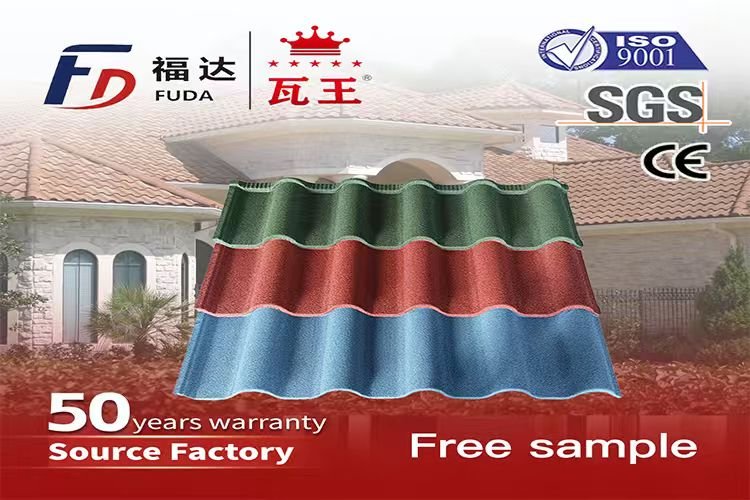
Concrete tiles are made from a mix of cement, sand, and water, pressed or extruded into shape and cured. They typically have a painted or coated surface for color. Concrete tiles are inexpensive to produce and widely used across the Americas, Europe, Australia, the Middle East, and parts of Asia.
Their main drawback is mass and brittleness. A standard concrete tile roof adds a heavy dead load to the structure, and individual tiles can chip or crack from hail, falling branches, or even a worker's footstep during maintenance.
Stone coated metal roof tiles are pressed steel panels coated with natural stone granules bonded to the surface with an acrylic resin. The steel base is typically galvalume (aluminium-zinc alloy) coated steel, which resists corrosion, while the stone coating provides UV protection, color, and texture.
The result is a tile that looks like a traditional clay or concrete tile but performs like a metal roof — light, strong, and waterproof. Fuda Roofing manufactures nine profiles (Rainbow, Milano, Bamboo, Classic, Roman, Wood, Stone, Norsen, and custom length) in a range of colors to suit different architectural styles.
| Factor | Concrete Tile | Stone Coated Steel |
|---|---|---|
| Weight | 40–50 kg/m² | 6–7 kg/m² |
| Water absorption | Porous (absorbs water) | Zero (100% waterproof) |
| Impact resistance | Brittle — cracks on impact | Steel core resists impact |
| Structural load on frame | Heavy — may need reinforcement | Light — no reinforcement |
| Installation speed | Slower (heavy, fragile) | Faster (light, interlocking) |
| Maintenance | Re-coating, tile replacement | Near zero |
| Color options | Limited, painted surface | 20+ colors, stone finish |
| Recyclability | Limited (often landfill) | Steel is 100% recyclable |
| Typical lifespan | 30–50 years (with maintenance) | 50 years (written warranty terms on qualifying orders) |
Concrete tiles weigh 40–50 kg/m². A 200 m² roof therefore carries an extra 8–10 tonnes of dead load compared to a metal roof. That load flows through the trusses, walls, and foundation — and it can require heavier framing, additional bracing, and a stronger footing, all of which add cost before a single tile is laid.
Stone coated metal roof tiles weigh 6–7 kg/m². The same 200 m² roof carries a little over 1 tonne. This is why stone coated steel is the preferred retrofit material: it can often be installed directly over an existing roof structure without reinforcement, and it is far better suited to seismic zones, soft soil, and lightweight steel or timber frames.
Concrete tiles can last 40–50 years — if they are not cracked. Hail, dropped tools, and foot traffic during maintenance all take a toll. Concrete is also porous: it absorbs water, and in freeze-thaw climates that trapped water expands as ice and progressively breaks the tile down. Over time, the painted surface fades and may need re-coating.
Stone coated metal roof tiles are built on a galvalume steel core that resists impact and corrosion. The stone chip surface is UV-stable and does not need re-painting. Because the material is waterproof and does not absorb moisture, freeze-thaw cycles are not a threat. The result is a roof that performs consistently for decades with near-zero maintenance — and you can walk on it without breaking tiles.
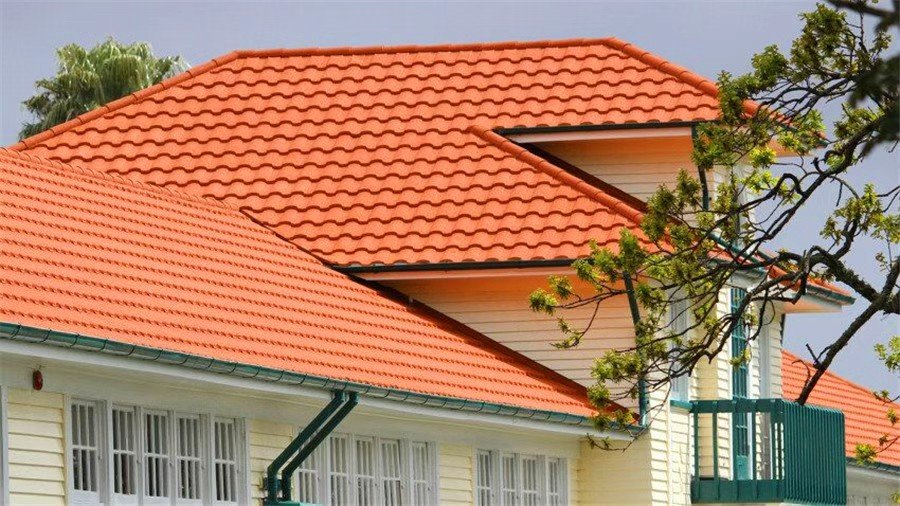
Concrete tiles are heavy and fragile, which slows installation. Each tile must be carried individually, and breakage during handling and nailing is common. A typical roof takes several days with a skilled crew, and waste from broken tiles adds to material cost.
Stone coated tiles install significantly faster. They are light enough to carry in bundles, and their interlocking edges reduce alignment time. Less labor time and lower breakage means a lower total installed cost, even before factoring in the structural savings.
Concrete tiles offer a limited palette of painted colors that fade over time. Stone coated metal tiles use natural stone granules in 20+ colors and multiple profiles, giving architects and developers the look of clay, slate, or wood shake — with the performance of steel.
Concrete absorbs water, making it vulnerable to freeze-thaw damage, moss and algae growth in humid climates, and progressive degradation in coastal salt environments.
Stone coated steel is 100% waterproof with zero absorption. It resists high winds, is non-combustible, and the galvalume base plus stone coating performs consistently in tropical humidity, desert heat, coastal salt spray, and arctic cold alike.
| Factor | Concrete Tile | Stone Coated Steel |
|---|---|---|
| Structure reinforcement | Often required | Not needed |
| Installation labor | Higher (heavy, fragile) | Lower (light, fast) |
| Breakage / waste | Common during handling | Minimal |
| Shipping (container) | Heavy — fewer m² per container | Light — more m² per container |
| Long-term maintenance | Re-coating + tile replacement | Near zero |
* Market cost varies significantly by region, steel grade, and order volume. Request a current quotation for your destination port rather than relying on generic price lists.
Concrete production is energy-intensive, and concrete tiles are difficult to recycle — most end up in landfill at end of life. Steel is 100% recyclable, and the lightweight nature of stone coated tiles means lower freight emissions per square metre of coverage.
New build, retrofit, or commercial? For retrofits and lightweight frames, stone coated steel is almost always the practical choice. For projects where a very specific traditional aesthetic is mandated, weigh whether concrete's appearance justifies its structural and maintenance burden.
Freeze-thaw regions, coastal areas, and hail-prone zones all favor stone coated steel. In mild, dry climates the performance gap narrows, but the weight and maintenance advantages remain.
Request the steel grade (look for galvalume/aluminium-zinc coating), steel thickness, stone coating thickness, and coverage per tile. Confirm these in writing before ordering.
Check batten spacing, fastener specifications, and whether your roofing crew needs training. Lighter, interlocking tiles generally simplify installation and reduce labor risk.
Always approve a physical sample, and ask for the technical data sheet, certificate documents, and warranty terms before committing to a bulk order.
A reliable manufacturer should be able to show you how quality is controlled at each stage:
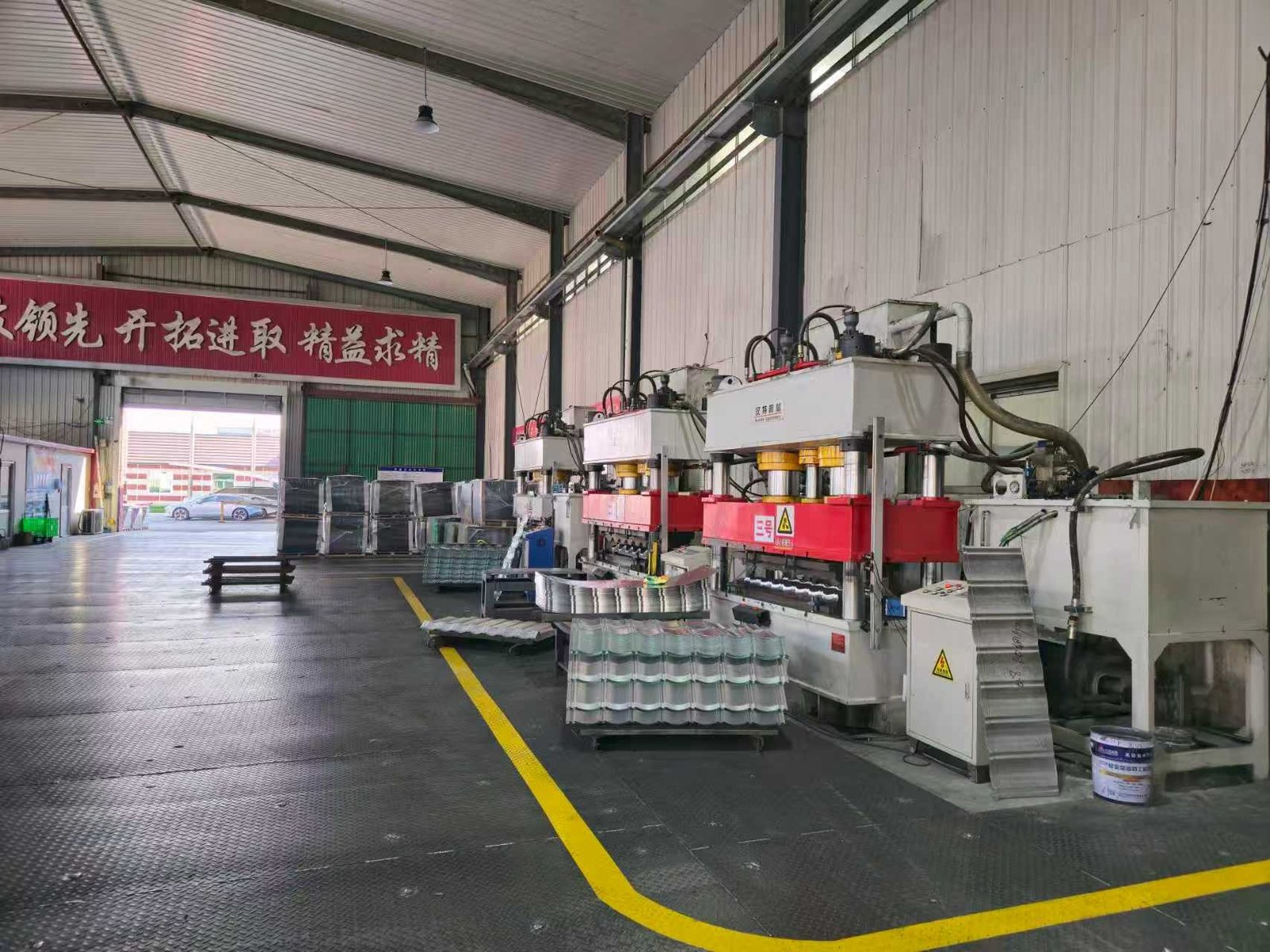
Stone coated metal roof tiles are packed in bundles, palletized, and loaded into standard shipping containers. Because the tiles are light and stack densely, a 40HQ container carries far more roof coverage than the same container filled with heavy concrete tiles — lowering your freight cost per square metre.
Export documentation typically includes the commercial invoice, packing list, bill of lading, and certificate of origin, with terms commonly structured as FOB or CIF depending on your preference.
A lower per-tile price means nothing if the steel is thinner or the coating is inferior. Always compare steel grade, thickness, and coating specification — not just price.
Coverage per tile differs by profile. Calculate the actual m² coverage per bundle and per container, not just the tile count.
Heavy materials impose hidden costs in framing and foundation. Include structural requirements when comparing the true cost of concrete vs. lightweight steel.
Color and texture can only be judged from a physical sample. Never place a bulk order from brochure photos alone.
Ridge caps, barge boards, flashing, and fasteners must match the main tile profile and color. Confirm the full accessory list in the quotation.
Q: Which is heavier — concrete or stone coated metal tiles?
Concrete is far heavier. Concrete tiles weigh about 40–50 kg/m², while stone coated metal roof tiles weigh about 6–7 kg/m² — up to 85% lighter.
Q: Can stone coated metal roof tiles be installed over an existing concrete tile roof?
In many retrofit cases, yes. Because the material is so light, it can often be installed over a sound existing structure without the reinforcement a second concrete roof would demand. Always confirm with a structural engineer for your specific building.
Q: Do stone coated metal roof tiles look like concrete tiles?
They can. Stone coated tiles are available in profiles and colors that mimic traditional tile looks, using a natural stone granule surface rather than a painted finish.
Q: Are stone coated metal roof tiles noisy in rain?
When installed over a proper underlayment and deck, stone coated metal roofs are comparable to other tile roofs in rain noise. The stone coating and deck assembly absorb sound better than bare metal sheeting.
Q: What is the minimum order quantity for a trial?
Trial orders are typically accepted from around 500 m² per color — roughly one small-to-medium residential roof. Smaller volumes can ship via LCL or shared containers.
Q: How do I confirm the steel quality before ordering?
Ask the supplier to specify the steel grade and coating (e.g., galvalume/aluminium-zinc) and steel thickness in the quotation and technical data sheet. A trustworthy factory provides this in writing without hesitation.
Concrete tiles are a proven, familiar material, but their weight, brittleness, and maintenance burden carry real costs that only become visible after installation. Stone coated metal roof tiles deliver the traditional tile appearance with a fraction of the weight, superior weather resistance, faster installation, and near-zero maintenance — a combination that increasingly makes them the smarter choice for importers, contractors, and developers.
Tell us your tile profile, quantity, and destination port. We'll send samples and a detailed quotation within 24 hours.
Request Free Quote →本文对比了石材涂层金属瓦与传统水泥瓦(混凝土瓦)的差异。水泥瓦重量约40–50 kg/m²,质地脆、吸水,在冻融、冰雹及沿海环境下易开裂、风化,且维护成本高;石材涂层金属瓦以镀铝锌钢板为基材,重量仅6–7 kg/m²,100%防水、抗冲击、不可燃,几乎免维护。由于重量轻、可交错锁扣安装,石材涂层金属瓦施工速度更快、人工成本更低,且同样货柜可装载更多屋面面积,从而降低单位运费。文章还涵盖了选购五步法、应索取的质量控制文件、包装与运输细节、常见采购误区以及完整采购检查清单。