FUDA  ROOFING
ROOFING
+86 138 6922 6336
Watch Factory
ROOFING
Fire safety is one of the first questions importers, contractors, and property developers ask before committing to a roofing material. In wildfire-prone regions — from California and Australia to South Africa and parts of Southern Europe — a roof's fire performance directly affects insurance costs, building-code compliance, and the safety of the structure below. Stone coated metal roof tiles are built from two of the most fire-resistant materials available in roofing: steel and mineral stone. Here's what that means in practice, and what you should verify before ordering.
Roof covering fire performance is standardized so that buyers can compare materials objectively. In North America, the governing test is ASTM E108 / UL 790, which exposes a roof assembly to a controlled flame and measures how it performs. Ratings fall into three classes:
| Rating | Fire Exposure | Typical Roofing Materials |
|---|---|---|
| Class A | Severe — highest level of protection | Stone coated steel, standing seam metal, clay, concrete |
| Class B | Moderate | Some treated wood shakes, certain fiberglass shingles |
| Class C | Light — minimal protection | Untreated wood shakes, many organic shingles |
Outside North America, equivalent standards apply — EN 13501-1 in Europe classifies construction products as A1/A2 (non-combustible) through F, and AS 1530 covers Australia. Stone coated metal roof tiles sit at the top of every one of these scales because the materials they are made from simply do not burn.
The structural base of every stone coated tile is steel — typically an AZ150 aluminum-zinc alloy coated steel substrate with a thickness of 0.35–0.45 mm. Steel does not ignite and will not spread flame. Its melting point (around 1,370–1,500°C) is far above the temperatures reached by ordinary building fires and even most wildfires. This is the same reason structural steel is used for fire-rated building frames.
The steel core is fully encapsulated by natural basalt/silica stone granules bonded in an acrylic base coat, finished with a UV-resistant clear acrylic overglaze. These stone chips are literally crushed rock — chemically inert and non-combustible. There is no point on the finished tile surface where a flame can find an organic fuel source.
Compare this to the alternatives. Asphalt shingles are built on a felt or fiberglass mat saturated with petroleum-based asphalt — a combustible material. Wood shakes are fuel by definition. Stone coated steel contains no wood, no asphalt, no felt, and no polymer foam. Nothing in the tile can contribute to or spread a fire.
When specifying stone coated metal roof tiles for a fire-prone project, pay attention to these parameters:
| Specification | Fuda Standard | Fire-Relevance |
|---|---|---|
| Steel substrate | AZ150 aluminum-zinc alloy coated steel | Non-combustible structural core; does not ignite or fuel a fire |
| Base steel thickness | 0.35–0.45 mm (customizable) | Thicker substrate retains integrity longer under heat exposure |
| Stone coating | Natural basalt/silica granules, acrylic-bonded | Inert mineral layer — non-combustible, blocks radiant heat from reaching steel |
| Overglaze topcoat | UV-resistant clear acrylic | Seals the granule layer; provides no continuous fuel surface |
| System weight | 6–7 kg/m² | Light weight supports fire-resistant structural design without heavy framing |
> Specifications may vary by tile profile, steel thickness, and project requirements. Confirm the final technical data sheet — including the fire-rating test report — before ordering.
| Material | Fire Rating (typical) | Fire Behavior |
|---|---|---|
| Stone Coated Steel | Class A | Non-combustible steel + inert stone granules. No fuel contribution. |
| Clay / Concrete Tiles | Class A | Non-combustible, but heavy and can crack under thermal stress, exposing the deck below. |
| Standing Seam Metal | Class A | Non-combustible steel; painted finish can scorch but will not spread flame. |
| Asphalt Shingles (fiberglass) | Class A | Rated Class A but still contain combustible asphalt; degrade under prolonged heat. |
| Asphalt Shingles (organic) | Class C | Combustible organic mat + asphalt — minimal fire protection. |
| Wood Shakes | Class C (untreated) | Combustible timber — actively fuels fire and can be banned in wildfire zones. |
Many fire-prone regions mandate Class A roof coverings by law. In the United States, California's Building Code and the International Wildland-Urban Interface (WUI) Code require Class A assemblies in designated zones. Australia's bushfire-prone areas (AS 3959) impose similar requirements. Confirm your project's zone before specifying any material.
A roof's fire rating applies to the complete assembly: roof deck, underlayment, and covering working together. A Class A tile installed over a combustible underlayment can lose its rating. For fire-prone projects, specify a fire-rated underlayment and confirm the full assembly rating, not just the tile's material class.
Reputable manufacturers maintain third-party test reports for their profiles. Request the ASTM E108 / UL 790 (or equivalent) test report for the exact tile profile and steel thickness you are purchasing — and verify the report covers your region's standard.
Ridge caps, flashing, and valley liners should match the fire resistance of the tiles themselves. Metal accessories preserve the non-combustible envelope; combustible sealants or plastic components should be avoided at fire-critical junctions.
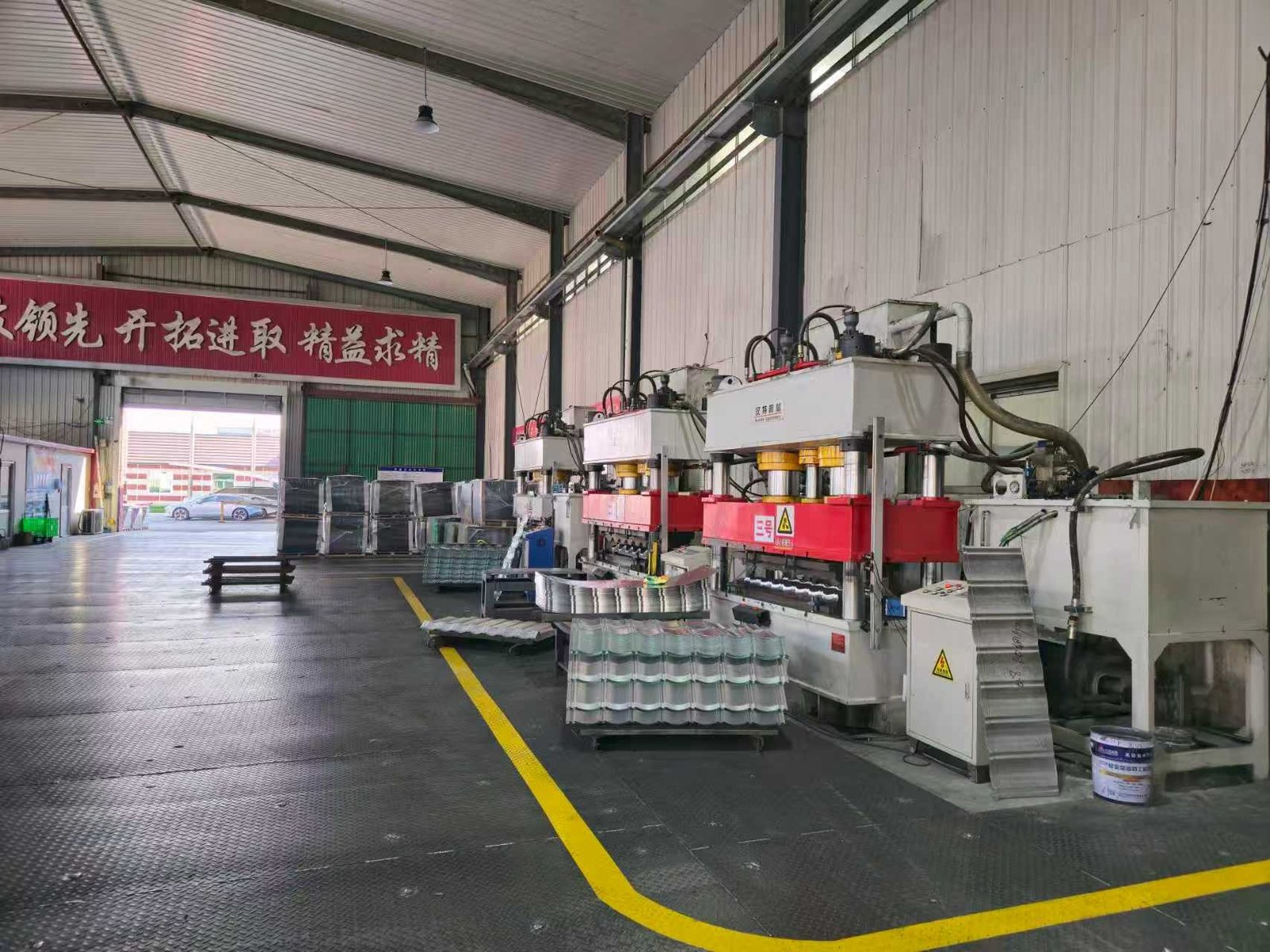
Fire resistance in stone coated metal roof tiles is a function of material composition, and material composition is a function of manufacturing discipline. Fuda Roofing's production process includes the following control points:
Most metal roofs are non-combustible, but not all are equal. Confirm the specific substrate (galvanized vs. aluminum-zinc alloy) and coating. The stone granule layer on a stone coated tile adds an extra barrier that thin painted metal lacks — and it also protects the steel from the radiant heat of a nearby fire.
The single most common reason a "Class A roof" underperforms in a real fire is a combustible underlayment beneath it. Verify the full assembly rating, not just the tile's rating.
Don't accept a manufacturer's word for fire performance. Request the third-party test report for the exact profile, thickness, and color family you are buying. Legitimate exporters provide these on request.
In wildfire events, most homes ignite through embers entering vents, eaves, and gaps — not through the roof surface itself. A Class A tile is only part of a fire-resilient design; pair it with ember-proof vent screens and closed eaves.
Q: Are stone coated metal roof tiles actually fireproof?
A: No roofing material is truly "fireproof," but stone coated metal roof tiles are non-combustible and typically achieve the highest fire rating (Class A under ASTM E108 / UL 790). The steel core and mineral stone coating do not ignite and do not contribute fuel to a fire.
Q: What fire rating do stone coated metal roof tiles have?
A: Stone coated metal roof tiles are typically classified as Class A — the highest category — under ASTM E108 / UL 790 testing in North America, and as non-combustible (A1/A2) under EN 13501-1 in Europe. Always confirm the specific rating for the profile you are purchasing by requesting the manufacturer's test report.
Q: Can stone coated tiles be used in wildfire / bushfire zones?
A: Yes. Their non-combustible steel and stone construction makes them one of the preferred roof coverings for wildfire-prone and bushfire-prone areas, where Class A / non-combustible assemblies are typically mandated by building code. Pair the tiles with a fire-rated underlayment and ember-protected vents for a complete fire-resilient design.
Q: How does fire resistance compare to clay or concrete tiles?
A: Both stone coated steel and clay/concrete tiles are non-combustible Class A materials. The practical difference is weight: stone coated steel weighs 6–7 kg/m² versus 40–60 kg/m² for clay/concrete, which simplifies fire-resistant structural design and reduces installation complexity.
Q: Will the stone coating melt or burn?
A: No. The stone granules are natural crushed rock (basalt/silica), which is inert and non-combustible. The acrylic binder is present only in a thin film; there is no continuous combustible surface. The steel core's melting point is far above ordinary building-fire temperatures.
Q: Do I need a special underlayment for fire-rated installation?
A: Yes. A roof's fire rating applies to the complete assembly. Use a fire-rated synthetic or metal underlayment rather than combustible felt to ensure the installed roof actually delivers its Class A rating.
Stone coated metal roof tiles are among the most fire-resistant roofing materials you can specify. Their non-combustible steel core and inert mineral stone coating deliver Class A fire performance with none of the combustible content found in asphalt shingles or wood shakes — while remaining far lighter than clay or concrete alternatives. For importers, contractors, and developers in wildfire- or bushfire-prone markets, that combination of fire safety, light weight, and low structural load makes stone coated steel a compelling specification. The key is to verify the assembly: confirm the profile-specific test report and pair the tiles with a fire-rated underlayment.
彩石金属瓦(Stone Coated Metal Roof Tiles)是防火性能最优的屋面材料之一。其钢质基材(AZ150镀铝锌钢芯)和天然玄武岩/石英石粒涂层均为不可燃材料,不含任何有机可燃成分,通常可达到ASTM E108 / UL 790标准下的最高防火等级Class A(欧洲EN 13501-1标准下为非可燃A1/A2级)。与沥青瓦、木瓦相比,彩石金属瓦不会点燃也不会为火势提供燃料;与粘土瓦、混凝土瓦相比,重量仅6-7kg/m²,大幅降低结构负荷,便于防火结构设计。本文详细介绍了Class A/B/C防火等级体系、影响防火性能的技术参数、与其他屋面材料的防火对比、易燃区域的选材步骤、质量管控流程,以及完整的采购清单。需要特别注意的是:屋面防火等级适用于整个屋面系统(含防水层),采购时应索取具体瓦型的第三方防火检测报告,并配合防火防水层和防余烬通风口,才能真正达到Class A防护效果。
Written by: Fuda Roofing Export Team · Last updated: 2026-09-14