FUDA  ROOFING
+86 138 6922 6336
Watch Factory
ROOFING
If you have decided to go with metal, you have already chosen the durability, fire resistance, and low maintenance that steel brings to a roof. But "metal roofing" is not one product — it is a family of systems that look and perform quite differently. Two of the most popular are stone coated metal roof tiles and standing seam metal roofing. Both sit on a steel base, yet they appeal to different projects, budgets, and architectural styles. This guide walks through how they compare so you can pick the one that fits your roof, your climate, and your budget.
Before comparing them feature by feature, it helps to understand what each system actually is, because they solve the same problem in opposite ways.
A standing seam roof is made from long metal panels that run vertically from the ridge down to the eave. Each panel has a raised rib (the "seam") along its edge, and adjacent panels are joined at these ribs with a mechanical seamer or a snap-lock profile. The fasteners are hidden — panels are held down by concealed clips underneath the seam, so there are no exposed screws on the roof surface. The result is a clean, unbroken expanse of metal, most often in galvalume steel, aluminium, or copper.
Stone coated metal roof tiles are individual, interlocking shingles stamped from steel and coated with stone granules bonded in an acrylic film. The steel base — typically a galvalume (aluminium-zinc) alloy such as AZ150 — is roll-formed into profiles that reproduce the shape of traditional clay, Roman, shingle, or slate tiles, then finished with the granular stone surface that gives the tiles their colour, texture, and traditional appearance. Fuda Roofing manufactures nine such profiles, including the Rainbow, Classic, Roman, Milano, Bamboo, and Wood tiles, each around 1340 × 420 mm.
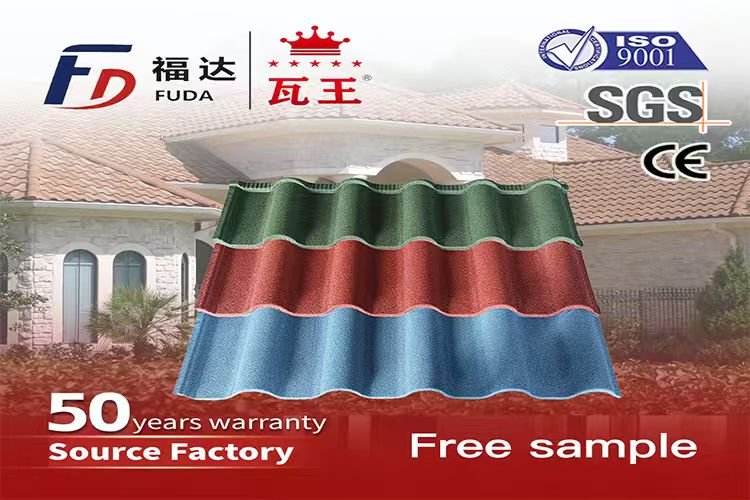
The most immediate difference is aesthetic, and it is usually the deciding factor. Stone coated metal roof tiles are designed to look like a traditional tile or shingle roof — the stone granules and deep profile shadows create the same visual character as clay, slate, or shake, from a distance and up close. This makes them a natural fit for Mediterranean villas, colonial homes, churches, resorts, and any building where a warm, classic roofline is part of the architecture.
Standing seam, by contrast, is deliberately modern and minimal. Its smooth vertical lines suit contemporary, industrial, and commercial buildings, and it reads as "metal" rather than mimicking another material. If the brief calls for a clean, low-profile silhouette, standing seam is hard to beat; if it calls for the character of a tiled roof, stone coated metal is the way to achieve it in steel.
On weight, the two systems are close cousins, because both are steel. A stone coated metal roof weighs roughly 6–7 kg/m², and standing seam panels are in the same ballpark at about 5–7 kg/m² depending on gauge and profile. Both are a fraction of the weight of clay (40–60 kg/m²) or concrete (40–70 kg/m²) tile, which means either system can usually be carried by a standard structure without reinforcement and can often be installed over an existing roof. If your primary goal is a lightweight roof, both deliver — the difference is how they attach.
Here the two systems diverge significantly, and it has a direct effect on cost and contractor availability.
Stone coated metal roof tiles install more like a traditional shingle roof. Tiles are laid onto timber or metal battens and fastened with exposed screws through a pre-formed nailing strip, row after row, overlapping as they go up the slope. The techniques are familiar to any experienced roofer, the tools are ordinary, and mistakes are easy to spot and correct. This is one reason stone coated metal has become popular in regions where specialist metal-roofing crews are scarce.
Standing seam installation is more specialised. Panels must be fabricated or ordered to length, then secured with hidden clips and joined with a mechanical seamer — a piece of equipment and a skill set that not every roofing company has. Long panels are heavy to handle and unforgiving of measurement errors, and detail work around valleys, hips, and penetrations takes experienced installers. The result is a premium roof, but the labour pool is smaller and the installation takes longer.
Standing seam is widely regarded as one of the more expensive metal roofing options, and the reasons are visible in the points above: more costly panel fabrication, hidden-clip hardware, and specialised labour all add up. Stone coated metal roof tiles are typically the more affordable of the two because the material is roll-formed in high volume, fastens with standard screws, and installs with a conventional crew. Exact pricing depends on your region, roof complexity, and order volume, so it is always worth getting quotes for both rather than relying on a single figure.
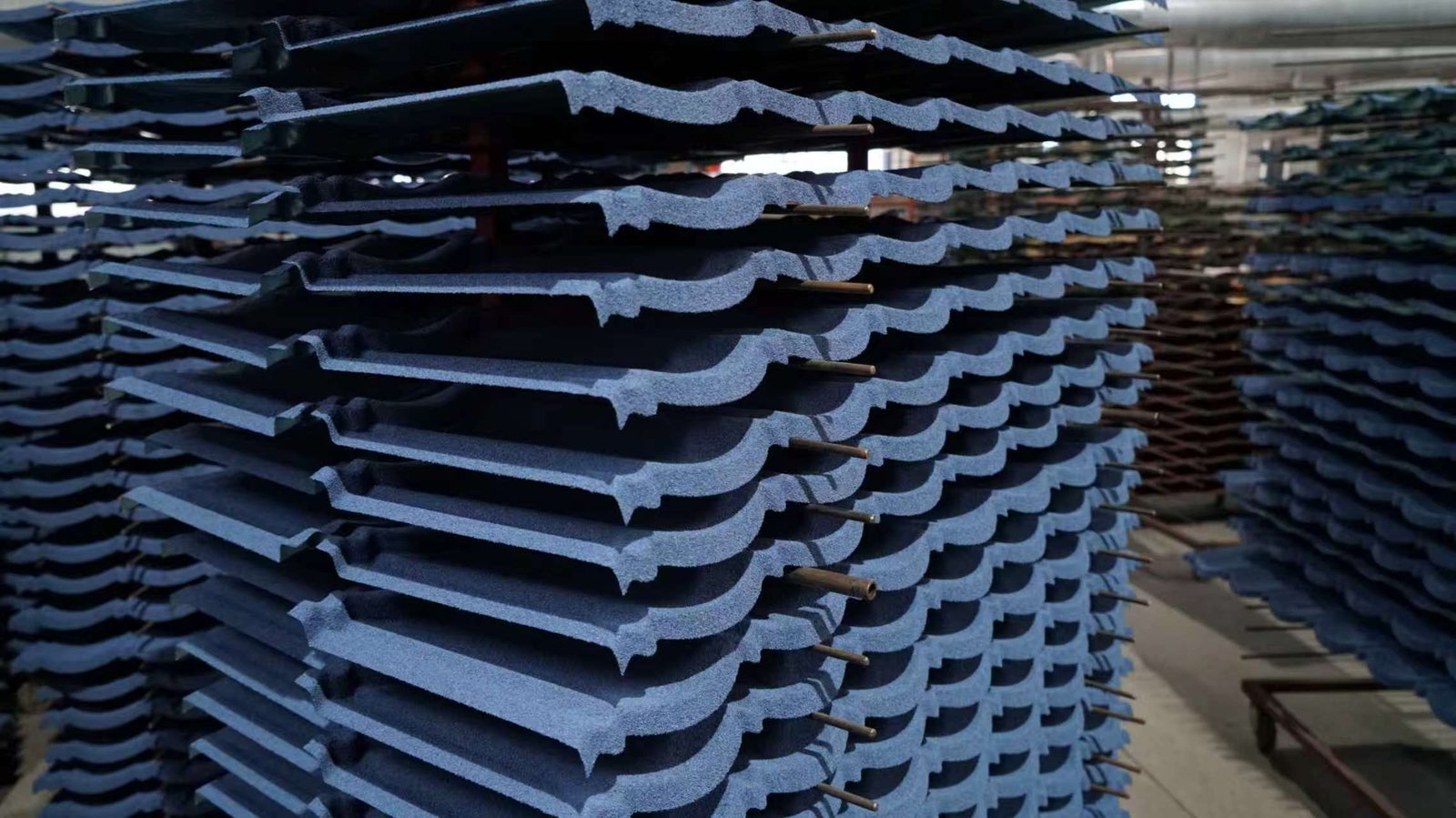
This is an area where the two systems differ in a way that matters over decades. Because stone coated metal roof tiles are individual pieces, a damaged tile can be replaced one at a time — unscrew the broken tile, screw in a new one, done. A dented or scratched standing seam panel, by contrast, is part of a long continuous run, so repairing it usually means replacing an entire panel section and re-seaming it, which is more invasive and more costly.
Both roofs are low-maintenance compared to asphalt or wood. Neither rots, both resist insects, and both need only periodic inspection of fasteners, flashings, and the surrounding structure. The practical difference is that when something does go wrong, the fix on a stone coated roof is smaller and cheaper.
Both systems are built for the long haul. A stone coated metal roof is engineered for a 40–50 year service life, while a well-installed standing seam roof can last 40–70 years. Both are non-combustible and fire-resistant, both shrug off rot and insects, and both are engineered to withstand high winds — standing seam through its concealed-clip, continuous-seam design, and stone coated tiles through interlocking profiles screwed to the batten system. In coastal or storm-prone regions, both are strong candidates provided the correct fastening and flashing details are used; we cover wind and coastal performance in more detail in our dedicated guides.
A common worry with any metal roof is rain noise, and here stone coated metal has a natural advantage. The stone granule layer bonded to each tile absorbs and dampens the sound of rain and hail, and the air gap created by the batten system adds further sound and thermal buffering. Standing seam panels, being a single smooth sheet, transmit more sound into the structure unless additional insulation or sound-deadening underlayment is specified. If acoustic comfort is a priority, stone coated tiles start from a better position.
| Feature | Stone Coated Metal Roof Tiles | Standing Seam Metal Roof |
|---|---|---|
| Appearance | Traditional tile / shingle / slate look | Sleek, modern vertical panels |
| Weight | ~6–7 kg/m² | ~5–7 kg/m² |
| Installation | Screwed to battens, familiar tools | Hidden clips + mechanical seamer |
| Cost | Generally more affordable | Generally higher material & labour cost |
| Repair | Replace individual tiles | Replace panel sections & re-seam |
| Lifespan | 40–50 years | 40–70 years |
| Best for | Traditional architecture, re-roofs, tighter budgets | Modern / minimalist design, very low slopes |
Choose stone coated metal roof tiles if you want the warm, traditional look of a tiled or shingle roof, an easier installation with a conventional crew, straightforward single-tile repairs, and a lower overall cost. Choose standing seam if the design is modern and minimalist, you have access to experienced standing-seam installers, and the budget allows for the premium in material and labour. For many homeowners and builders, stone coated metal roof tiles hit the sweet spot: the character of a tiled roof with the strength and longevity of steel, at a more accessible price.
Fuda Roofing manufactures nine stone coated metal roof tile profiles on AZ150 galvalume steel — the traditional look of a tiled roof with a 40–50 year service life. Request a free sample and full data sheet to see the profiles, colours, and specifications for yourself.
Request Free Sample & Data Sheet →Q: Is stone coated metal roofing cheaper than standing seam?
A: Generally, yes. Stone coated metal roof tiles are roll-formed in high volume and install with standard screws and a conventional crew, while standing seam requires custom panel fabrication, hidden-clip hardware, and specialised labour, all of which add cost.
Q: Which metal roof looks more like traditional tile?
A: Stone coated metal roof tiles. Their stone granule surface and deep profile shapes are designed to reproduce the look of clay, slate, and shingle roofing, whereas standing seam has a smooth, modern panel appearance.
Q: Are both roofs lightweight?
A: Yes. A stone coated metal roof weighs roughly 6–7 kg/m² and standing seam panels around 5–7 kg/m² — both far lighter than clay or concrete tile, so both can often be carried by a standard structure.
Q: Which roof is easier to repair?
A: Stone coated metal roof tiles are easier to repair because individual tiles can be unscrewed and replaced one at a time. A damaged standing seam panel is part of a long run and usually needs a larger section replaced and re-seamed.
Q: Which roof lasts longer?
A: Both are long-lived. A stone coated metal roof is engineered for 40–50 years, and a well-installed standing seam roof can last 40–70 years. Correct installation and maintenance matter more than the difference on paper.
Stone coated metal roof tiles and standing seam metal roofing are two excellent ways to put steel on a roof, and the right choice comes down to looks, budget, and who is installing it. Standing seam delivers a sleek, modern profile and exceptional longevity but asks for specialised installation and a higher budget. Stone coated metal roof tiles deliver the classic appearance of a tiled roof, easier and cheaper installation and repair, and a 40–50 year service life — the strength and durability of metal, in a form that suits traditional architecture. If the character of a tiled roof matters to you, and you want steel's performance without standing seam's premium, stone coated metal roof tiles are hard to beat.
彩石金属瓦与立边咬合(直立锁边/暗扣)金属屋面是两种最主流的金属屋面系统,都建立在钢板基材之上,却面向不同的建筑风格与预算。本文从外观、重量、安装、成本、维修、寿命与隔音等维度逐一对比。彩石金属瓦以钢板辊压成型、表面覆天然石粒,再现陶土瓦、石板瓦、木瓦等传统屋面质感,单片约 1340×420mm,重量约 6–7 kg/m²,采用挂瓦条+螺钉安装,工艺与传统瓦屋面接近、对施工队伍要求更低,单片损坏可单独更换、维修简单,寿命 40–50 年;立边咬合金属屋面由竖向长板构成,隐藏式卡扣+机械咬边,外观简洁现代,重量约 5–7 kg/m²,寿命可达 40–70 年,但面板定制、专用工具与专业安装带来更高的材料与人工成本,且损坏维修需整段更换重新咬边。二者均属轻质、防火、免维护的长寿命金属屋面。结论:追求传统瓦面质感、预算更紧、希望用常规施工队伍安装并便于局部维修的,选彩石金属瓦;建筑风格现代极简、有专业安装队伍且预算充足的,选立边咬合金属屋面。对多数业主与建造商而言,彩石金属瓦兼具"瓦屋面的外观 + 钢材的强度与寿命",性价比更高。
Written by: Fuda Roofing Export Team · Last updated: 2026-11-09