FUDA  ROOFING
ROOFING
+86 138 6922 6336
Watch Factory
ROOFING
Color isn't just about aesthetics — it affects your building's energy efficiency, local market acceptance, and even the perceived value of your project. For importers, distributors, and contractors sourcing stone coated metal roof tiles, understanding color options is a practical business decision. Here's what you need to know to choose the right colors for your market.
Stone coated metal roof tiles use natural stone chips bonded to a steel substrate with acrylic resin. The stone granules come from quarried basalt and are ceramic-coated in specific colors before application. Here are the standard options:
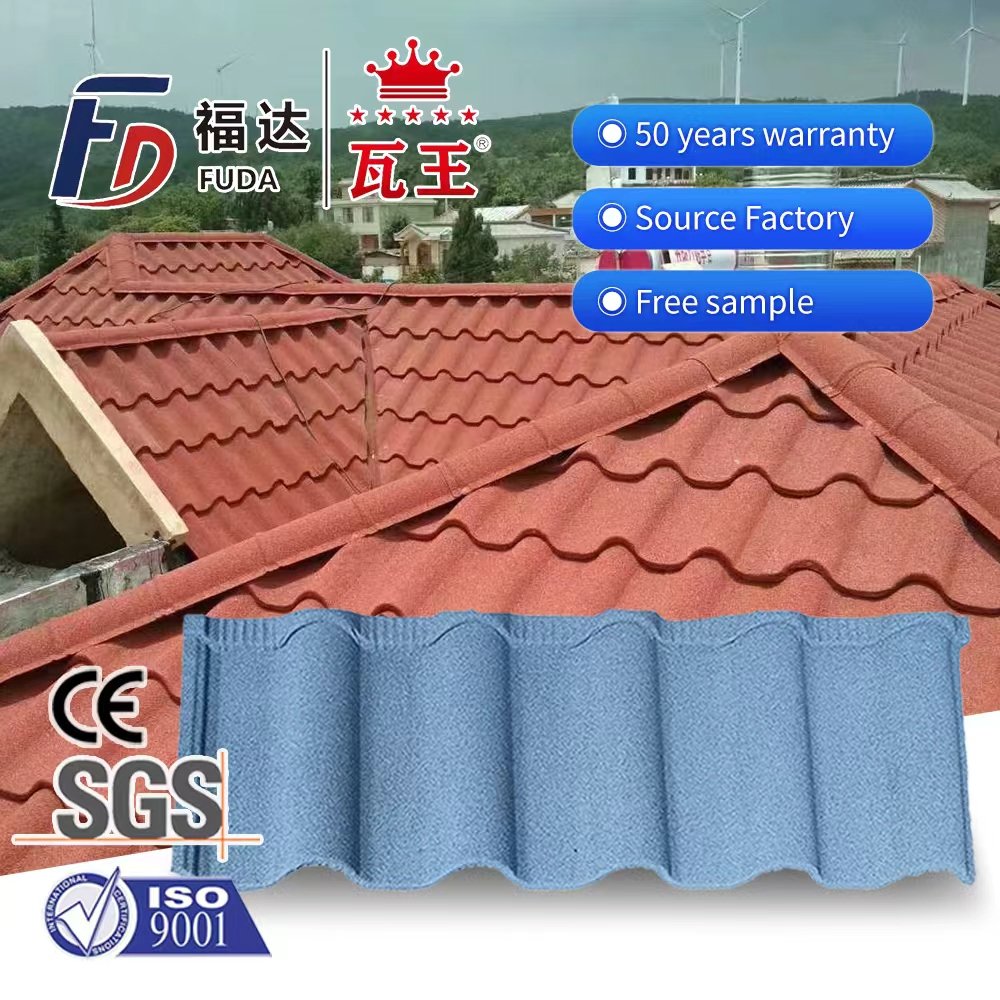
| Color | Best For | Heat Reflection | Popular Markets |
|---|---|---|---|
| Terracotta Red | Mediterranean, Spanish, tropical | Medium | Southern Europe, Latin America, Southeast Asia |
| Charcoal Gray | Modern, commercial, minimalist | Low (absorbs heat) | North America, Northern Europe, Middle East |
| Forest Green | Rural, eco-resorts, mountain homes | Medium | Africa, Southeast Asia, UK & Ireland |
| Ocean Blue | Coastal, resort, Mediterranean | Medium-High | Caribbean, Mediterranean, Pacific Islands |
| Chocolate Brown | Traditional, warm tones, cabins | Low-Medium | North America, Europe, Australia |
| Slate Black | Premium, luxury, high-contrast | Very Low | Japan, Korea, luxury projects worldwide |
| Desert Sand | Hot/dry climates, Middle East | High | Middle East, North Africa, Australia |
| Antique Copper | Heritage, restoration, luxury | Medium | Europe, high-end residential worldwide |
* Exact shades may vary slightly between production batches. Always approve a physical sample before bulk ordering.
Roof color is one of the most impactful decisions for building energy performance. The science is straightforward: lighter colors reflect more solar radiation (higher solar reflectance), keeping the building cooler. Darker colors absorb more heat, which can be beneficial in cold climates but problematic in hot ones.
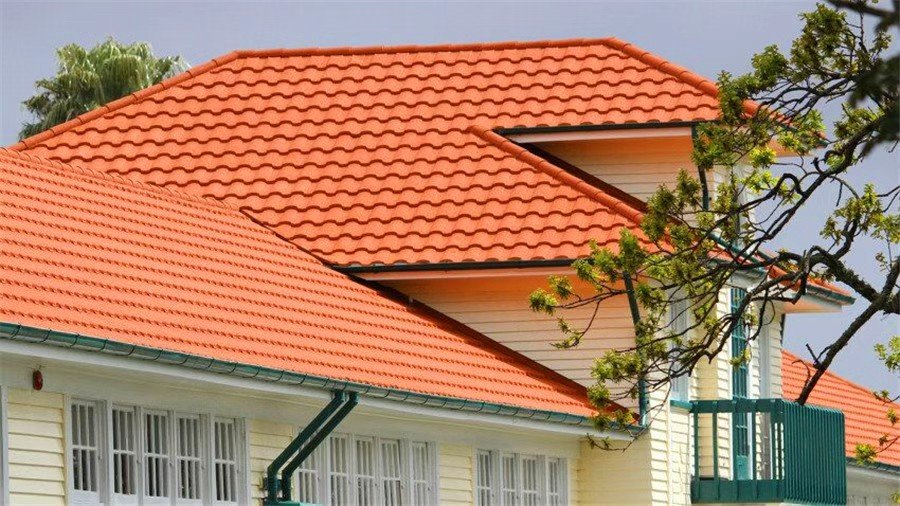
| Roof Color | Solar Reflectance | Cooling Load Impact | Recommended Climate |
|---|---|---|---|
| Light (Desert Sand, Light Gray) | 0.55–0.70 | ↓ 15–25% reduction | Hot, tropical, desert |
| Medium (Terracotta, Green, Blue) | 0.30–0.50 | ↓ 5–15% reduction | Temperate, mixed |
| Dark (Charcoal, Black, Brown) | 0.10–0.25 | ↑ Heat gain in summer | Cold, northern regions |
* Solar reflectance values are approximate. Stone coated tiles with lighter-colored stone granules achieve higher reflectance than smooth metal roofs of similar color due to the textured surface.
For buyers in hot climates (Middle East, Africa, Southeast Asia, Northern Australia), a light-colored roof can reduce air conditioning costs by 15-25%. For cold climates (Northern Europe, Canada, Russia), a darker roof helps with passive solar heating during winter months.
As an exporter, knowing which colors your target market prefers is critical. Stocking the wrong colors means slow-moving inventory and tied-up capital. Here's what distributors report across major markets:
| Region | Top-Selling Colors | Notes |
|---|---|---|
| West Africa (Nigeria, Ghana) | Terracotta Red, Chocolate Brown, Forest Green | Red dominates 60%+ of orders. Green popular for churches and institutional buildings. |
| East Africa (Kenya, Tanzania) | Terracotta Red, Ocean Blue, Charcoal Gray | Blue gaining share in coastal developments; gray growing with modern architecture trend. |
| Middle East (UAE, Saudi Arabia) | Desert Sand, Terracotta Red, Charcoal Gray | Sand/beige preferred for heat reflection; gray for commercial/office buildings. |
| Southeast Asia (Philippines, Vietnam) | Terracotta Red, Ocean Blue, Forest Green | Red is the default; blue popular for beach resorts and hotels; green for mountain retreats. |
| South America | Terracotta Red, Chocolate Brown, Antique Copper | Traditional terracotta for residential; copper tones for heritage restoration projects. |
| Caribbean Islands | Ocean Blue, Forest Green, Terracotta Red, Desert Sand | Lighter colors preferred for hurricane-resistant construction; blue/green match tropical aesthetics. |
| Europe (South & East) | Terracotta Red, Antique Copper, Slate Black | Heritage colors dominate; black slate-look for premium renovations in UK/Germany. |
One of the most common buyer concerns is: "Will the color fade after a few years of sun exposure?"
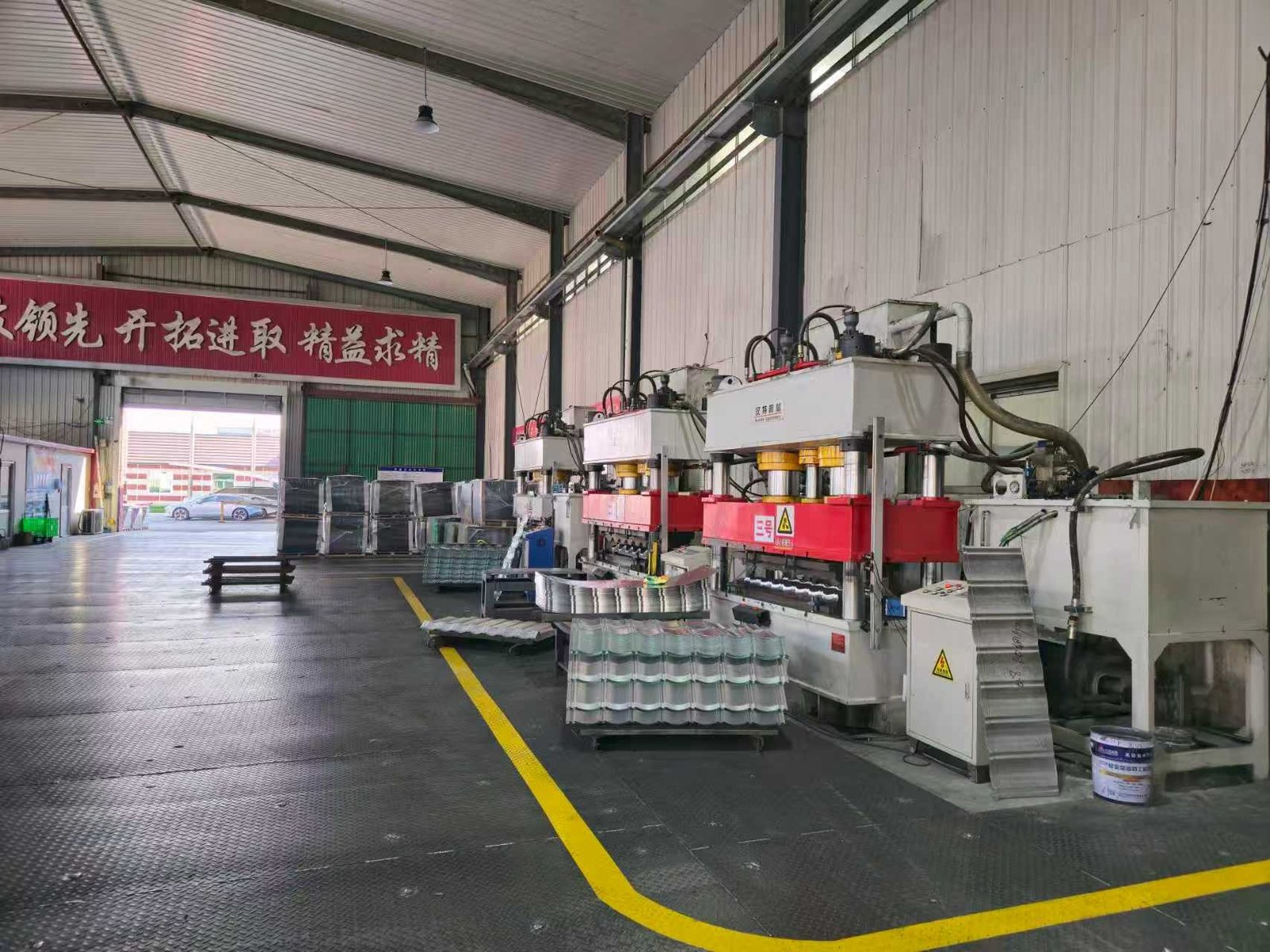
With stone coated metal tiles, the answer is no — and here's why the technology is fundamentally different from painted roofing:
Buyer Tip: When evaluating color samples from different manufacturers, ask for accelerated weathering test reports (ASTM G155 or ISO 4892). Reputable factories provide QUV test data showing color retention after 1,000-2,000 hours of accelerated UV exposure — equivalent to 10-20 years of outdoor exposure.
While 8 standard colors cover most market needs, some projects require custom color matching — for example, matching an existing roof on an extension, or complying with local HOA or municipal color codes.
Custom color feasibility depends on:
For orders below 3,000 m², the standard 8-color palette provides enough variety to satisfy virtually any project requirement. If you need a color that falls between two standard options, discuss mixing two standard colors in the same order — many distributors do this successfully for multi-building developments.
Residential, commercial, institutional, or industrial? Residential projects prioritize curb appeal (terracotta, brown, blue). Commercial buildings favor professional, understated colors (charcoal gray, slate black). Schools and churches often use green or blue.
Hot climate → lighter colors (Desert Sand, light blue, light terracotta). Cold climate → darker colors (charcoal, brown, black). Mixed climate → medium tones (standard terracotta, forest green).
Some municipalities, HOAs, and heritage zones mandate specific roof colors. Verify local building codes before ordering. In some European historic districts, only terracotta or slate-look colors are permitted.
Never make a bulk order based on website photos or brochures. The stone chip texture, gloss level, and exact shade can only be evaluated with a physical sample in your hand — ideally viewed outdoors in natural light.
If you're a distributor entering a new market, order small quantities of 3-4 colors and track which sells fastest. Many successful distributors start with 70% terracotta red (the global bestseller) and 30% split across 2-3 other colors, then adjust the mix based on actual customer demand.
Monitor calibration, ambient lighting, and image compression all distort color perception. A color that looks warm terracotta on your phone may appear brown-orange in person. Always approve a physical sample.
Color perception changes with viewing angle. A dark gray roof on a steep (45°) pitch looks different from the same color on a low-slope (15°) roof — the steep pitch catches more light and appears lighter. View samples at the same angle as your project's roof.
For developments with 10+ buildings, consider using 2-3 complementary colors to avoid a monotonous appearance. Many developers use one dominant color (e.g., terracotta) with accent colors on corner units or community buildings.
Colors carry cultural meaning. In some West African markets, green roofs signal institutional/government buildings. In parts of the Middle East, black is associated with religious architecture. Research local color associations before committing to large stock orders.
Terracotta from different factories varies significantly — from orange-red to brown-red to pink-red. The stone granule source (quarry location) determines the exact shade. Always compare samples from different suppliers side by side.
Q: Can I order two different colors in the same container?
Yes. Mixed-color containers are standard for distributors testing new markets. Typical minimum per color is 500 m². Mixing 2-3 colors in one 20GP or 40HQ container is common practice.
Q: Do ridge caps and accessories come in matching colors?
Yes. Ridge caps, hip caps, barge boards, and flashing are stone-coated in the same color as the main tiles. This ensures a uniform appearance across the entire roof.
Q: Will dark colors make my building too hot?
In hot climates, yes — dark roofs absorb more heat. However, stone coated tiles have a natural air gap between the tile and the roof deck (from the tile profile corrugation), which provides passive ventilation and reduces direct heat transfer. Combined with proper attic insulation, dark roofs are viable even in warm regions.
Q: How do I clean stone coated tiles without damaging the color?
Use low-pressure water (garden hose, not pressure washer) and mild soap. Avoid abrasive brushes or chemical cleaners. The stone surface is durable but pressure washing can dislodge granules. Annual gentle cleaning is sufficient for most environments.
Q: Do you offer a color-match guarantee between production batches?
Minor shade variation between batches is normal due to natural stone granule sourcing. For large projects that span multiple containers, order the full quantity in a single production run to ensure batch consistency. For repeat orders, provide the original sample for reference matching.
Q: What's the minimum quantity for a trial order?
We accept trial orders from 500 m² per color. This covers approximately one small-to-medium residential roof (80-120 m² of roof area). Trial orders ship via LCL (less than container load) or shared container services to reduce freight costs.
Color selection is one of the most impactful decisions in a roofing project — it affects energy costs, market appeal, and long-term satisfaction. Stone coated metal roof tiles offer a proven, UV-stable color palette backed by natural stone technology that's been field-tested for decades. Start with physical samples, match the color to your climate and market, and you'll have a roof that looks as good in year 20 as it does on day one.
Tell us which colors you're considering and your project location. We'll send physical samples and a detailed quotation within 24 hours.
Request Free Quote →石材涂层金属瓦的颜色选择不仅仅关乎美观——它直接影响建筑的能源效率、区域市场接受度和项目感知价值。本文涵盖了8种标准颜色选项(从经典赤陶红到现代炭灰色),以及颜色对制冷成本的影响(浅色屋顶可降低15-25%空调费用)、各区域市场偏好(西非偏好红色、中东偏好沙色、欧洲偏好赤陶和古铜色)、石材涂层的抗褪色原理(天然玄武岩石粒+丙烯酸树脂粘合,非油漆可比),以及定制颜色的最低起订量和流程。还包括五个常见买家错误和完整的采购检查清单。